
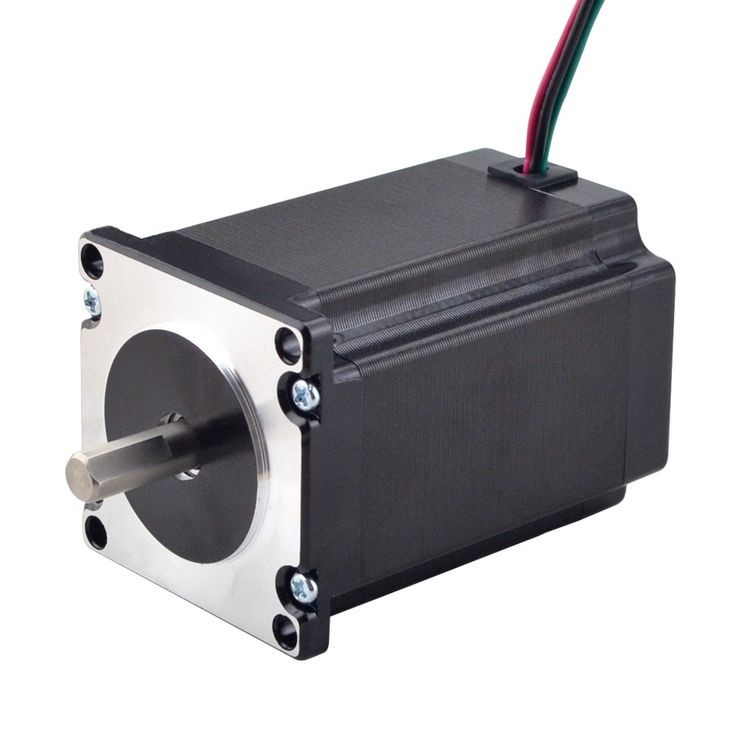
Table of Contents
In the fields of motion control and automation, precise, reproducible movements are essential. Accuracy is non-negotiable, whether it is the seamless performance of a 3D printer, the complex carving of a CNC machine, or the coordinated movement of robotic arms.
The stepper driver, a little but strong gadget at the center of these systems, is the unsung hero who guarantees every movement is carried out precisely and dependably; they are sometimes eclipsed by the motors it controls.
The key link between the control unit and the stepper motor, a stepper driver transforms digital instructions into regulated mechanical motion. It controls the current flow, direction, and timing required for gradual movement.
Given this vital function, the stepper driver is justly called the primary component of exact motion control. This article looks at stepper drivers, their operation, their kinds, how to pick the proper one, where they are employed, and how to resolve frequent problems.
Part 1: What is a Stepper Driver?
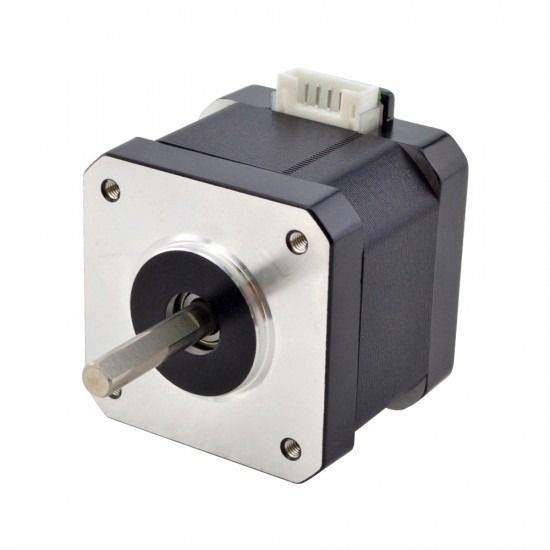
A stepper driver is any electronic motor controller that causes or facilitates precise positioning and motion control for use in automated systems. Lower-power command signals are sent from a microcontroller, PLC, or motion controller and are converted to the high-power electrical pulses necessary to energize the motor coils in a given sequence.
Stepper motors move in discrete steps, and, accordingly, driver circuits dictate how fast and in which direction the motors shall turn by imposing frequencies and orders of these pulses. The driver circuits also regulate the amount of current flowing to the motor so that it does not get overheated or stall.
Typically, modern stepper motor drivers provide microstepping capabilities to step the motor in finer increments for smooth motion and increased accuracy. In other words, the driver acts as the brain behind any motion, ensuring a mechanical motion that is controlled, repeatable, and accurate.
The main components of a stepper motor
There are several main parts of a stepper motor that allow it to create a well-controlled and finely tuned movement:
- Rotor: The rotor is the rotating part of the motor, and it is connected to the output shaft. Generally, it will have teeth or magnetic poles that can interact with the magnetic fields generated by the stator to produce motions in steps.
- Stator: Surrounding the rotor is the stator, which is stationary. The stator consists of several wire coils that are grouped into phases. When electrical current energizes these phases, electromagnetic fields are generated.
- Winding Phases: Stepper motors are classified as either bipolar or unipolar, depending upon the winding arrangement. Bipolar motors are those having just two winding phases, while unipolar motors have four. Each phase corresponds to a specific set of coils on the stator.
- Pulses and Control: Electrical pulses are sent to winding phases in a specific sequence to rotate the motor. Direction, speed, and the length of every step the motor takes are all governed by the timing and order of these pulses.
Key Functions of a Stepper Driver:
- Controls the speed and direction of motor rotation
- Supplies appropriate current to the motor windings
- Enables microstepping to increase resolution
Implements protection features (e.g., over-voltage, over-current)
Part 2: What is the Working Principle of a Stepper Driver?
The stepper motor circuit resides between a control system (like a microcontroller/PLC) and a stepper motor. The general mechanism is to convert low-power control signals into high-power signals, energizing the motor windings in an exact sequence. This sequence somehow rotates the motor shaft in fixed steps, thus allowing very precise positioning and motion control.
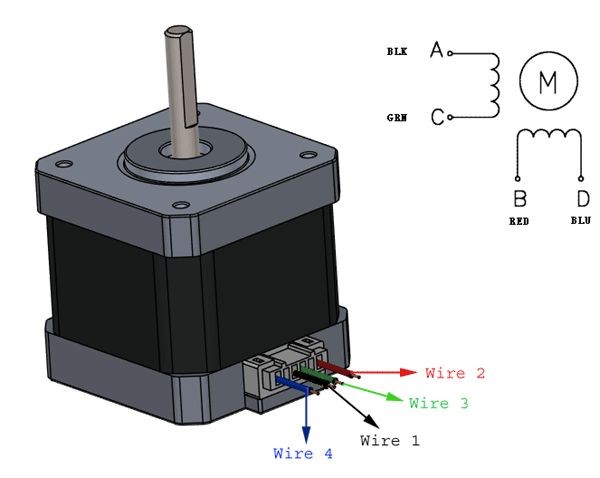
Step-by-step of how it works
Receiving Pulse and Direction Signals
The stepper driver will receive two main inputs from the controller: a pulse signal to move a step and a direction signal to specify the direction of rotation, either clockwise or counterclockwise.
Analyzing Commands
The driver accepts each incoming pulse as a command to step the motor once, or if microstepping is enabled, the driver applies microsteps. The driver interprets the signals of the direction to know which order to apply the step sequence.
Activating Stator Windings
The driver can energize selected stator windings (phases) of the motor according to the pulse and direction input signals. Energizing stator windings produces a magnetic field, interacting with that of the rotor.
Rotor Motion Generation
When the magnetic field is shifted from one phase to the next, it pulls the rotor so that it aligns itself with the energized stator poles. This controlled magnetic attraction then turns the rotor step by step.
Modes of Operation
- Full Step: One full step per pulse; maximum torque but less smooth.
- Half Step: Combines two phases for smoother movement.
- Microstepping: Divides steps into smaller increments (e.g., 1/16 or 1/256 of a step) for ultra-precise positioning.
Part 3: What are the Main Types of Stepper Drivers?
They include the following:
Driver for Permanent Magnet (PM) Stepper Motors
Drivers for permanent magnet stepper motors are meant to control motors using permanent magnets in the rotor. Simple and inexpensive, these motors run with rather low torque and resolution. Energizing the stator coils in sequence, the driver allows the magnetized rotor to align with the shifting magnetic fields.
Typically, PM stepper drivers operate with motors having big step angles (roughly 7.5° to 15° per step), making them appropriate for simple applications, including low-cost automation, toys, or small printers. Though they lack the precision and torque of other stepper varieties, they are simple to manage and need little electronics. These drivers are ideal for use when high accuracy or performance is less crucial than low cost and simplicity.
Variable Reluctance (VR) Stepper Motor Driver
VR stepper motor drivers are built to control motors with a toothed, non-magnetic rotor that aligns with the energized stator poles due to magnetic reluctance. Unlike permanent magnet motors, VR stepper motors get motion by reducing magnetic resistance, not using permanent magnets.
The driver pulls the rotor into alignment by sequentially energizing stator windings. Though VR stepper motors tend to give less torque and accuracy than hybrid types, their high stepping rates and low inertia make them excellent for fast movement.
These drivers are appropriate for inexpensive, high-speed applications where extreme accuracy is not needed, such as simple robotics or textile machines. Though they are rarely employed in modern high-precision applications because of their low torque and resolution, VR stepper drivers are usually less expensive and less complicated.
Hybrid Synchronous (HS) Stepper Motor Driver
The most sophisticated and often used kind is are hybrid synchronous stepper motor drivers. Using a toothed, magnetized rotor and several stator phases to achieve great accuracy, torque, and efficiency, they combine aspects of both PM and VR motors. These drivers can microstep, allowing very accurate positioning and continuous motion.
To lessen step size (normally 1.8° or even lower per step) and increase torque, the rotor of a hybrid motor has two components with opposing magnetic polarity. Many advanced HS stepper motor drivers include dynamic current control, automatic idle current lowering, and over-temperature protection.
Demanding uses, including CNC machines, 3D printers, medical devices, and industrial automation, require the best candidates in these areas. Though more costly than PM and VR variants, their adaptability, performance, and accuracy make hybrid stepper drivers the obvious option for most contemporary motion control systems.
Part 4: What are the Typical Applications of Stepper Drivers?
Systems where exact control of position, speed, and motion is demanded depend on fundamental components called stepper drivers. Their capacity to move stepper motors consistently and incrementally makes them perfect for many different uses spanning several sectors. Some of their applications include:
CNC machines
In CNC systems, stepper drivers manage tool movement across several axes. By guaranteeing correct tool head positioning, they allow exact cutting, drilling, and milling operations in manufacturing.
Three-D Printers
In 3D printing, stepper drivers are essential since they control the motion of both the print head and the print bed. This guarantees precise placement of every layer, therefore producing prints with great resolution and dimensional stability.
Robotics
Controlled joint and arm motions are achieved by robots using stepper drivers. From basic pick-and-place machines to sophisticated humanoid robots, stepper drivers provide the repeatability and control required for regular operation.
Medical Tools
Smooth and exact control is achieved by devices such as infusion pumps, surgical robots, and laboratory automation systems using stepper drivers. In these uses, accuracy is crucial for testing reliability and patient safety.
Fabric and Packaging Machinery
Stepper drivers, with high accuracy and synchronization, help control fabric feed systems, cutting operations, and material handling, therefore enhancing product quality and production speed.
Surveillance Systems and Cameras
Pan-tilt-zoom (PTZ) camera systems’ stepper drivers enable exact angle control for focusing and tracking, therefore enhancing image capture in broadcasting and security.
Part 5: How to Pick a Good Stepper Driver?
Reliable and accurate performance in your motion control system depends on your choice of the appropriate stepper driver. An incompatible or subpar driver could cause skipped steps, overheating, and erratic motion. These are important elements to think about while selecting a stepper driver:
Match the Motor Type
First, you need to determine your stepper motor type—bipolar or unipolar—as each needs a different driver arrangement. Most often used type, hybrid stepper motors typically combine with bipolar drivers.
Ratings for voltage and current
Make sure the driver matches the voltage and current needs of your stepper motor. A driver with too little current output will underpower the motor; too much current might harm it. Always give drivers with variable current control some thought; this will help to optimize performance and lower heat.
Microstepping Feature
Choose a driver supporting microstepping if your program calls for smooth and exact motion. This function splits complete steps into smaller increments, hence lowering vibration and increasing positioning accuracy, critical in robotics and 3D printing applications.
Step Resolving and Control Interface
Select a driver that fits your preferred step resolution and the control system (e.g., Arduino, PLC, or motion controller). Complex systems may require compatibility with step/direction signals or sophisticated communication methods, including CANopen or RS-485.
Application Conditions and Environment
Think about the operating conditions. Choose strong, well-cooled drivers with dependable connectors and enclosures suitable for industrial or high-vibration environments. Also consider the driver’s dimensions, installation possibilities, and noise level.
Brand Reliability and Budget
Finally, consider performance expectations against cost. Especially crucial for mission-critical or business uses, reliable brands may provide better documentation, technical assistance, and long-term dependability.
Bonus: What are the common problems and solutions?
Nevertheless, reliable stepper drivers can encounter different problems during use. Knowing these typical issues and their answers is crucial for maintaining performance and reducing downtime.
Motor Not Moving
Problem: The stepper motor doesn’t rotate as commanded.
Solution: Verify the driver’s power supply and ensure it meets the needed voltage and amp rating. Check every electrical connection between the controller, driver, and motor. Check the pulse signal input as well; no movement might imply the controller is not sending steps.
Motor Vibration or Noise
Problem: Excessive vibration, buzzing, or mechanical noise during movement is a nuisance.
Solution: Enable microstepping to help motion and decrease the step size. Make sure the motor is not running close to resonance frequencies either; this could be assisted by speed adjustments or damping. Good motor mounting to lower the mechanical echo is also quite successful.
Overheating
Problem: The driver or motor gets too hot to touch.
Solution: Reduce present values using the driver’s configuration. Proper heat dissipation should be guaranteed; if required, add cooling fans or heatsinks.
Missed Steps or Error
Problem: The motor either loses a step or fails to finish one.
Solution: Verify that the motor is not overburdened or speeding too fast. Lower velocity or raise current (within safe limits). Make sure the driver can meet the torque and step resolution requirements of the motor.
Electrical Noise and Signal Interference
Problem: Motor stutters or reacts erratically.
Solution: Use shielded cables and run signal wires far from strong lines. Include ferrite beads or capacitors to help suppress noise. Make sure there is good signal termination and strong grounding.
Conclusion
Accurate motion control systems depend fundamentally on stepper drivers. They allow high-precision, repeatable movement in a broad range of fields—from industrial automation to consumer electronics—by transforming digital signals into regulated motor steps.
Knowing how they operate, the many kinds offered, and how to choose the best one will greatly improve the dependability and performance of your project. Although problems like overheating, vibration, or skipped steps could arise, the correct setup and troubleshooting help to control them effectively.
Above all, stepper drivers are crucial for achieving smooth, accurate, and programmable motion as technology develops continuously; hence, they are invaluable in the robotics and automation scene of today.
 English
  Arabic
  Spanish
  Portuguese
  Italian
  French
  German
  Vietnamese
  Thai
Thai  Chinese
  Turkish
  Japanese
  Korean
  Russian