

Table of Contents
Closed-loop stepper drives are changing how many different sectors approach precision motion control. By including an encoder inside the conventional stepper motor, these drives provide increased performance, more accuracy, and better efficiency. This technology is shown to be revolutionary, particularly in uses demanding high torque production and fast acceleration. In this article, we shall investigate the reasons closed-loop stepper drives are regarded as groundbreaking in the field of motion control. We will also discuss their characteristics, benefits, spheres of use, and future directions.
What Is A Closed-Loop Stepper Driver?
Advanced motor control systems called closed-loop stepper drivers employ encoder feedback to continually monitor and change the motor’s position. Better performance and accuracy are made possible by this real-time adjustment
Definition of a Closed-Loop Stepper Driver
An advanced motor control method called a closed-loop stepper driver guarantees constant accuracy of the motor’s position by using feedback from an encoder. The mechanism keeps changing the motion of the motor so that it may fix itself should any differences arise. This feedback loop makes more exact control possible than conventional open-loop stepper drivers, which lack position feedback and are prone to mistakes.
How It Differs from Traditional Stepper Motors
Closed-loop stepper motors are constantly watched over an encoder, unlike open-loop stepper motors, which move in set steps. The encoder reports back to the driver from tracking the rotor’s position. This closed feedback loop makes dynamic change possible, increasing motor efficiency and positioning accuracy. Conversely, conventional stepper motors cannot adapt to changes in load or external conditions without recalibration.
Key Components of a Closed-Loop Stepper Driver
A closed-loop stepper system consists essentially in the stepper motor, the driver, and the encoder. The motor produces motion; the driver regulates the power sent to the motor; and the encoder gives real-time feedback to the driver on the current position of the motor. These parts taken together guarantee the motor’s exact and effective performance in dynamic surroundings.
Advantages of Adding an Encoder
An encoder distinguishes the closed-loop system from conventional stepper motors and increases its sophistication. Because encoders offer exact location data, they enable more accurate motions and help eliminate mistakes, including missed steps. Because of their capacity, closed-loop stepper motors are especially helpful for jobs needing great dependability and accuracy.
Applications of Closed-Loop Stepper Drivers
Applications where accuracy, torque, and speed are critical call for closed-loop stepper drivers. Closed-loop stepper systems provide exceptional performance that benefits sectors such as automotive, medical devices, and electronics manufacturing. Their great accuracy, low power consumption, and heat output qualify them for a broad spectrum of difficult chores.
How Does A Closed-Loop Stepper Driver Work?
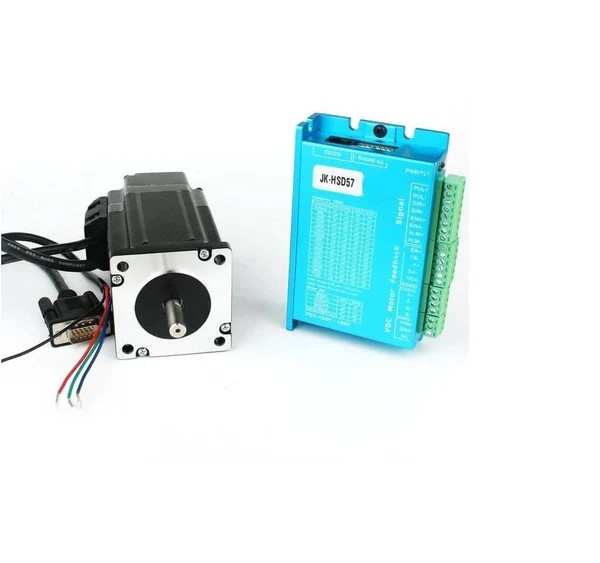
Closed-loop stepper drivers include real-time input into the functioning of the stepper motor more precisely and efficiently than conventional systems.
The Role of Feedback in Closed-Loop Systems
A closed-loop stepper driver moves the motor under control using position feedback from an encoder. The encoder constantly delivers position data to the driver as the motor runs. By adjusting the current provided to the motor using this knowledge, the driver guarantees that the rotor stays exactly in the desired position. Common problems such as missing steps or overheating connected with open-loop systems can be partly eliminated by this dynamic feedback method.
Control Mechanism: From Open-Loop to Closed-Loop
In open-loop stepper motors, the controller supplies a set amount of power regardless of the motor’s actual position. This approach might cause inefficiencies and errors, particularly in cases of changing external loads. Under a closed-loop stepper system, the encoder’s feedback dynamically changes the motor’s current. This increases the system’s general efficiency and helps it be more flexible in changes.
The Encoder's Role in Motion Control
The heart of the closed-loop feedback system is the encoder. It tracks the motor’s position and provides data to the driver, thereby enabling real-time changes. Often at resolutions of thousands of counts per rotation, encoders can measure the position in quite tiny increments, producing very accurate motor movements. The closed-loop system would not be able to adapt continuously without the encoder.
The PID Loop: A Key to Precision
Closed-loop stepper systems depend critically on the PID (proportional-integral-derivative) loop. This control system enables the driver to change the motor’s current, guaranteeing exact position control. By continuously assessing the position inaccuracy and modifying the motor’s power output, the PID loop helps eradicate the overshooting or oscillations that might arise in conventional stepper systems.
Dynamic Adjustment for Power Efficiency
The dynamic power adjusting of the closed-loop system is one of its primary advantages. Motors in open-loop systems are sometimes driven at constant power levels, which can cause a waste of energy and surplus heat. On the other hand, closed-loop systems simply change the current based on the position and load needs of the motor, optimizing power consumption and lowering needless heat generation.
What Are The Main Advantages Of Closed-Loop Stepper Drivers?
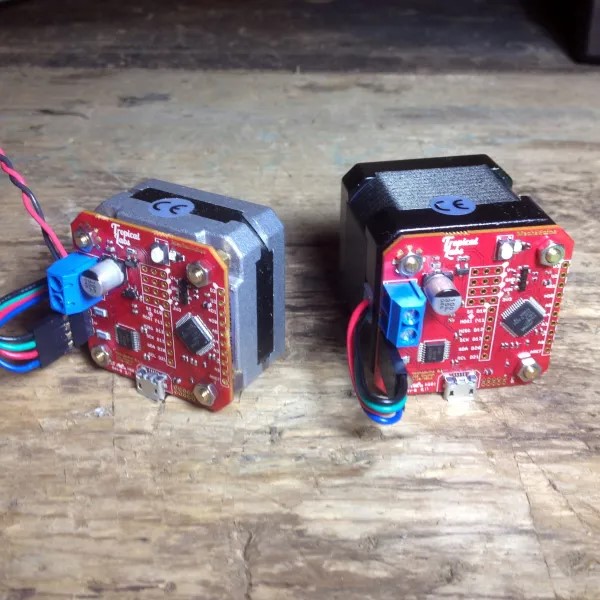
Many challenging applications in many sectors find closed-loop stepper drivers appropriate because of their advantages.
Enhanced Efficiency
Most notably, closed-loop stepper systems offer efficiency. The motor employs the exact power needed for the current task by means of real-time encoder feedback. This lowers heat generation and energy use by avoiding the continuous overdriving seen in open-loop systems. These advantages are priceless in sectors like electronics manufacturing and medical equipment, where energy efficiency is vital.
Higher Torque and Acceleration
Comparatively, to their open-loop predecessors, closed-loop stepper motors may generate noticeably more torque and faster acceleration. The real-time feedback lets the motor change its power output as necessary, allowing it to manage more loads without stalling. This greatly benefits applications requiring fast movements, such as pick-and-place equipment or textile machinery.
Improved Accuracy and Resolution
One of a closed-loop stepper driver’s most obvious benefits is improved precision. By highly precisely tracking the motor’s location, the encoder enables positioning accuracy free from reliance on the step size of the stepper motor. For example, a stepper motor with a 1.8° step can attain far more fine resolution in a closed-loop system. For jobs requiring great accuracy, such as medical equipment and automated testing systems, closed-loop stepper systems are perfect.
Reduction in Heat Generation
Closed-loop stepper motors create far less heat than open-loop systems since the system modulates the motor’s current depending on the load and position. By avoiding overheating, this increases motor life and energy economy. This quality is helpful in settings like labs or robots where temperature control is important.
Elimination of Lost Steps
One of the typical problems with open-loop stepper motors is the risk of lost steps, in which inadequate power causes the motor to lag behind the desired trajectory. This is particularly troublesome in high-speed or heavy-load applications. By constantly monitoring the motor’s position, closed-loop stepper drives remove this problem so that the motor stays on track independent of load variations or outside influence.
What Are The Application Areas Of Closed-Loop Stepper Drivers?

Industries where high precision, great torque, and quick acceleration are critical find use for closed-loop stepper drivers more and more.
Automotive Industry
Closed-loop stepper motors find utility in electronic control systems, actuators, and automated assembly lines within the automotive industry. Robotic arms and positioning systems in car manufacturing are two examples of systems that demand exact and consistent motion and would be perfect for them, given their capacity to maintain great accuracy while managing high acceleration.
Medical Devices and Equipment
Because of their accuracy, low heat generation, and dependability, closed-loop stepper drives are sought after in medical equipment. High accuracy and low heat are absolutely vital in prostheses, surgical robots, and diagnostic equipment using them. The effectiveness of medical treatments and patient safety depends on these systems running with the highest accuracy, which the real-time position feedback guarantees.
Textile and Manufacturing Industries
Closed-loop stepper drives are mostly used in the textile sector for machinery that needs to move materials at high speed while preserving accuracy. They also give the required performance and dependability in coil winding and circuit board manufacture, where fast acceleration rates and exact positioning are critical.
Robotics and Automation
Closed-loop stepper drives provide the high torque and quick acceleration required for exact motions, benefiting robotic systems. Closed-loop stepper motors enable accurate and smooth motion control in industrial robots, pick-and-place applications, and research robots, thereby improving the dependability and efficiency of robotic systems.
Semiconductor Manufacturing
Closed-loop stepper motors are crucial in the semiconductor sector, where operations like wafer handling and mask alignment require exacting accuracy. Maintaining the integrity and quality of semiconductor goods depends on exact control in situations demanding high speed and low error rates, which these motors guarantee.
How To Choose A Suitable Closed-Loop Stepper Driver?
Selecting the appropriate closed-loop stepper driver requires weighing several important criteria influencing performance and fit for your system.
Consider Torque Requirements
The first consideration in selecting a closed-loop stepper driver is the torque needed for your needs. Should your system run at high speed or handle large loads, you will require a driver capable of generating enough torque yet preserving accuracy. Ensuring the best performance depends on selecting the appropriate motor torque rating and driver characteristics.
Assess the Required Acceleration Rates
Another vital element is acceleration. Applications requiring fast motions would find closed-loop stepper drivers perfect since they are made to provide great acceleration rates. If your application calls for fast tasks, including robotic systems or automated assembly lines, be sure the driver you select can manage the necessary acceleration without sacrificing performance.
Evaluate Encoder Resolution
The general accuracy of a closed-loop system depends heavily on the resolution of the encoder. Higher-resolution encoders offer better position feedback, making more exact motor movements possible. Choose a system with a high-resolution encoder if your application requires extremely fine motions, like in medical equipment or highly accurate manufacturing.
Understand Environmental Conditions
Think about your application’s running surroundings. Look for a closed-loop stepper driver that your system can handle in extreme temperatures or hostile situations. Many closed-loop stepper systems guarantee dependability in demanding environments, including sophisticated coatings and heat-resistant designs.
Compatibility with Other Systems
Finally, be sure the closed-loop stepper driver you decide on fits the other parts of your system. This includes checking for fit with your current power sources, motion controllers, and communication systems. Guaranturing compatibility will help reduce possible problems and simplify the integration procedure.
What Is The Future Prospect Of Closed-Loop Stepper Drivers?
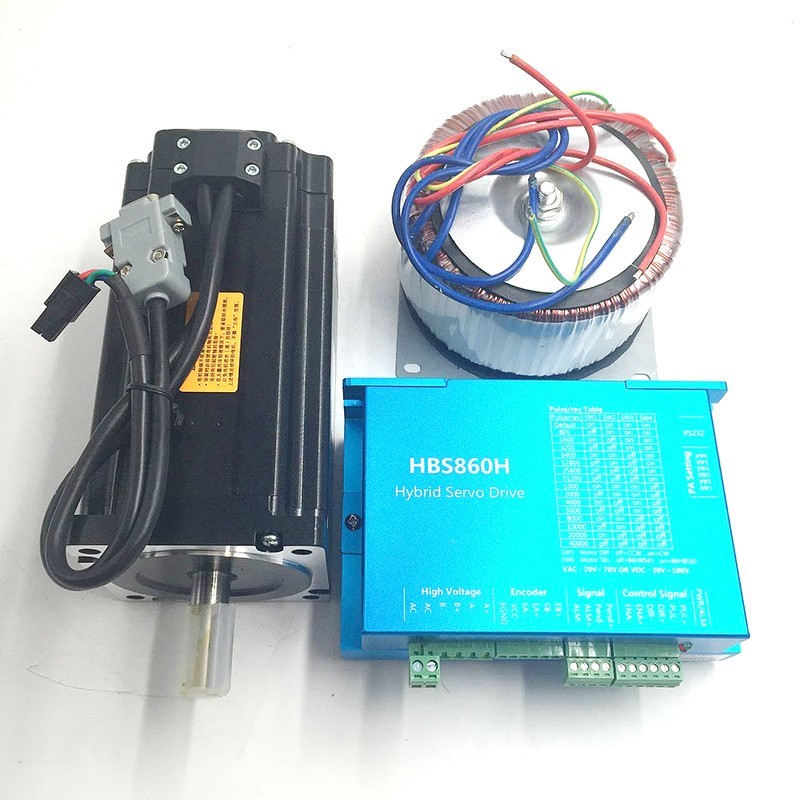
Their future seems bright, with many technological developments guiding closed-loop stepper motors toward more acceptance.
Growing Demand for Precision and Efficiency
The adoption of closed-loop stepper drives is poised to expand as sectors demand accuracy and efficiency more and more. These systems are perfect for a variety of uses since they provide a special mix of low power consumption, great accuracy, and dependability of performance. Manufacturers seeking energy-efficient solutions free from performance compromises will drive this trend forward.
Technological Advancements in Encoders and Controllers
As encoder technology and controller performance continue to advance, closed-loop stepper systems are becoming increasingly reasonably priced and accessible. Since low-cost, high-resolution encoders enable its adoption, more businesses can use this technology without the large upfront expenses. As these developments continue, closed-loop stepper drivers will eventually form the norm in motion control systems.
Integration with Smart Technologies
The future of closed-loop stepper drives will probably see more interaction with smart technologies, including IoT (Internet of Things) and artificial intelligence-driven systems. These technologies can offer even more real-time changes and control, further enhancing the accuracy and efficiency of closed-loop systems.
Expansion Across Industries
Closed-loop stepper drives should find increasing acceptance in many sectors as their advantages become more well-known. Industries poised to gain from this technology include robotics, automation, medical devices, semiconductors, and tools. As costs drop and performance gains, closed-loop stepper drivers will become a go-to solution for motion control uses globally.
Conclusion
Closed-loop stepper drivers are changing the field of accuracy motion control offers. In sectors needing high torque and fast acceleration, their capacity to offer better efficiency, accuracy, and performance has made them innovative technologies. The future seems bright as this technology develops since more businesses use closed-loop stepper systems for motion control requirements. Understanding closed-loop stepper drives’ main characteristics and benefits helps companies use this great technology to enhance their systems and applications.

 English
  Arabic
  Spanish
  Portuguese
  Italian
  French
  German
  Vietnamese
  Thai
Thai  Chinese
  Turkish
  Japanese
  Korean
  Russian