
Table of Contents
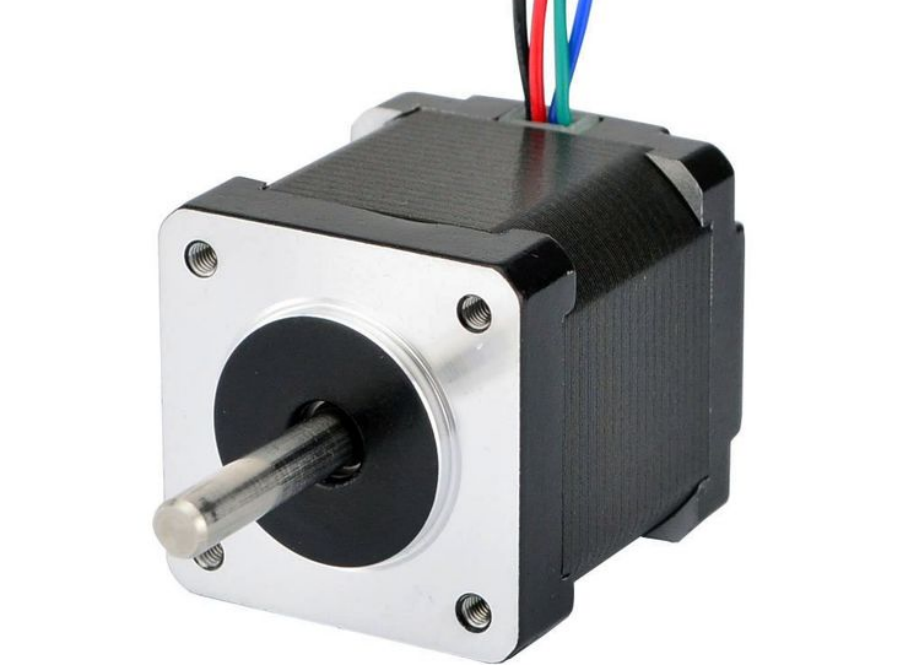
Stepper motors are essential to the modern motion control system because these motors translate electrical pulses into accurately measured physical movements. Unlike typical motors, which revolve continuously, Stepper motors rotate only at fixed angular increments, qualifying them for use in fields needing accuracy and repeatability.
From 3D printing and CNC machining to medical devices and robotic arms, they are employed in several different sectors. Their basic design, dependability, and cost-effectiveness have made them a popular choice among engineers and producers all around.
Factors including automation, rising need for energy-efficient systems, and spreading smart technologies have contributed to significant expansion in the worldwide stepper motor industry recently. The fundamentals of stepper motors are covered in this article, together with their present market conditions, future trends, and main manufacturers. Read on to get a deeper understanding.
Part 1: What is the Basic Principle of Stepper Motors?
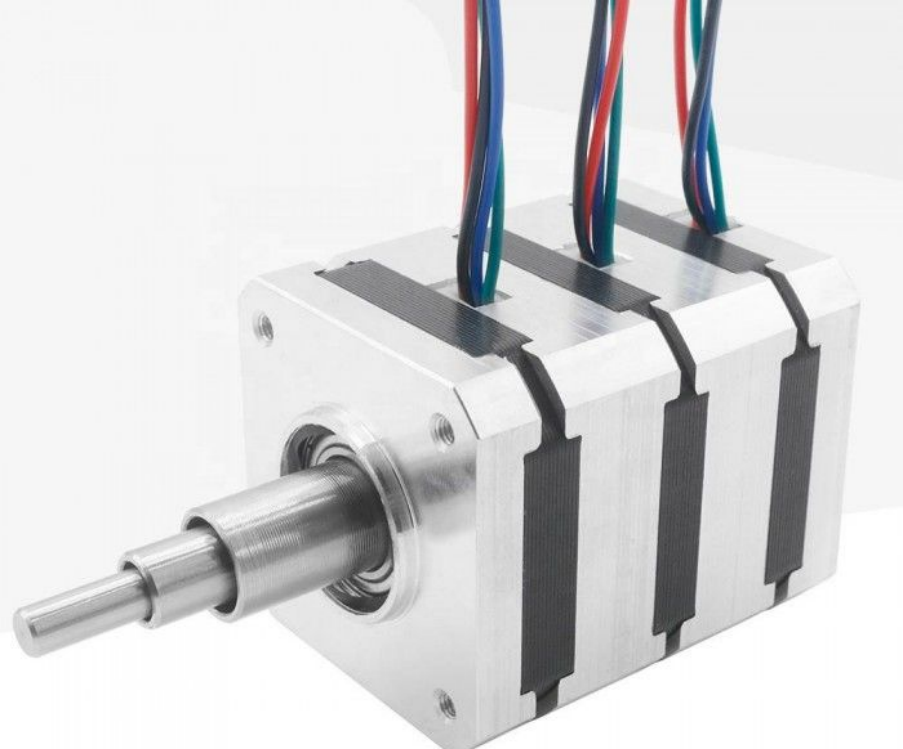
Stepper Motors are electromechanical machines that convert electrical pulses into defined mechanical motions. This differs from some of the traditional DC or AC variants that rotate constantly depending on the supply.
The basic operation of a stepper motor is based on the theory of electromagnetism. In a common configuration of the stepper motor, the rotor is the rotating component, and the stator is the stationary component. Typically, the rotor is a soft iron core or a permanent magnet; the stator has coils configured in a given arrangement.
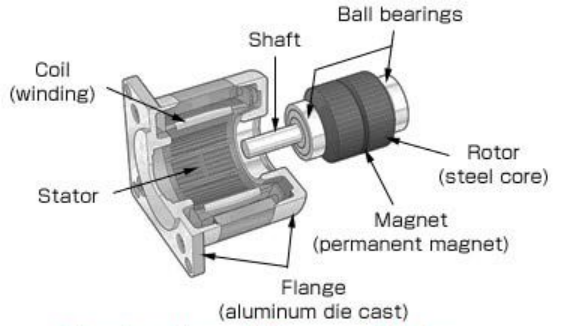
When current flows through these stator coils in a predetermined sequence, magnetic fields are produced in the stator that interact with the magnetic rotor, which aligns itself with the stator and hence generates incremental motion. One pulse received from the electrical source produces one step.
Stepper motors fall into three different categories, each with somewhat different fundamental concepts of operation:
- 1. Permanent magnet stepper motors: They generate larger steps and employ a rotor made of permanent magnet. Used for low-speed and low-torque uses.
- 2. Variable Reluctance Stepper Motors: They have a toothed soft iron rotor and operate on the magnetic attraction between rotor teeth and stator poles. They provide greater step resolution but generally less torque.
- 3. Hybrid Stepper Motors: Combining elements of both permanent magnet and variable reluctance kinds, hybrid stepper motors provide improved performance, accuracy, and efficiency. Mostly used for high-performance applications.
Control of stepper motors is rather simple. A controller sends pulse signals to a driver, which sequentially energizes the motor windings. One step is advanced by the motor; varying the pulse frequency alters the rotational speed.
Part 2: What are the Characteristics of Stepper Motors?
Their unique design and operating characteristics grant them attributes that fit automation, robotics, and computer-controlled gear perfectly. Here are the main characteristics of stepper motors:
1. Precise Positioning and Control
Perhaps the most distinguished feature of a stepper motor is its ability to move fixed angular increments or “steps.” Each step corresponds to a pulse of electric current applied to the motor windings.
Due to this stepping rotation, a stepper motor may be used for accurate positioning without any feedback mechanism. For this reason, stepper motors are commonly found in open-loop control situations where accuracy and simplicity take precedence.
2. Repeatability and Consistency
Since every step is dictated by an electric pulse, stepper motors consistently return to the same positions unless overloaded and skipping steps. Such repeatability is crucial for repeatable movement in areas like 3D printing, CNC machining, and medical apparatuses.
3. High Torque in Low-Speed Operation
At low speeds, stepper motors yield high torque and require no gear reduction or complicated electronic control to achieve this. This feature is useful in camera-control systems, precision conveyor belts, and laboratory automation.
4. Feedback Systems Not Needed
Motor feedback systems that use encoders or sensors for position information or monitoring can be expensive and inconvenient to install. A stepper avoids this by being controlled simply, without any form of feedback. But when used in a variable load environment and where higher accuracy levels are demanded, this performance can be improved by providing it with feedback.
5. Simple and Reliable Control
Control signals for a stepper motor normally use a pulse driver and controller. Direction and speed are changed with changes in pulse sequence and frequency. The relative simplicity reduces circuit design and software programming costs so much that even beginner designers and hobbyists can hardly refrain from giving it a try.
6. Holding Torque
While energized and not turning, a stepper motor provides holding resistance to any external force trying to rotate the shaft. This torque may be required when holding position is an important step in applications. For instance, valve control or the positioning of robotic arms.
7. Scalability and Variety
Stepper motors come in almost all sizes and powers, from the smallest used in watches and video cameras to the very large ones used in heavy industrial automation. This characteristic makes them versatile to fit a variety of mechanical and electrical requirements.
8. Power Use and Heat Production
Stepper motors have one restriction in that they often produce heat when run continuously or kept under power in a fixed position. They also draw power even when stationary, so impacting general efficiency in battery-operated devices. Good driver selection and careful heat dissipation design will help to solve certain problems.
Part 3: What is the Current Market Situation of Stepper Motors?
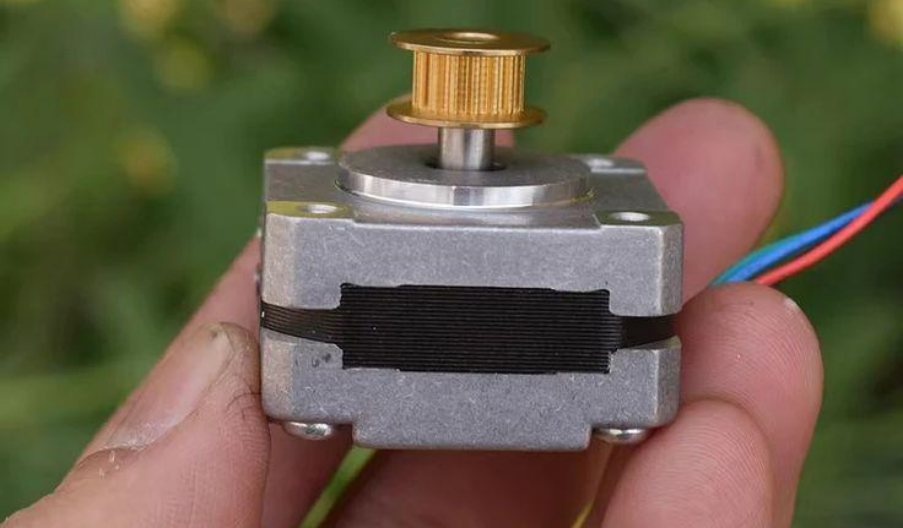
The stepper motor market is presently undergoing steady, sustainable growth as technology demands increase in precision motion control. Several industries, such as manufacturing, medical devices, robotics, and consumer electronics, are putting forth the need for reliable and inexpensive motor solutions. Stepper motors are popular in commercial, industrial, and domestic uses, from start to finish of the conversion of electrical impulses to mechanical motion. This sector now fulfills many of these necessary roles.
The greater increase is promoted by automation and robotics. As industries are developing smarter and more efficient production methods, a growing need arises for motors that provide precision, repeatability, and ease of use. The requirements are satisfied by stepper motors and are relatively easy to interface and maintain, which gains the preference while selecting motors for small and big applications.
The market is also under the influence of technological improvements. Innovations like hybrid stepper motors have enhanced torque, speed control, and efficiency, especially at low speeds. Considering these improvements, stepper motors find a broader range of applications, including those where previously the requirement was too stringent.
The biggest share of the stepper motor market on a global scale is held by the Asia Pacific region. This can be attributed to fast-paced industrialization, a flourishing electronics manufacturing sector, and the drift towards the adoption of automation technologies in countries such as China, Japan, and India. Besides Europe, North America is another major market, especially in advanced manufacturing, aerospace, and healthcare.
It’s a highly competitive market with many global and regional players trying to set up a research and development division. In addition, they’re trying to orient their product line toward new model development that could be higher in efficiency, energy savings, or performance when subjected to adverse working conditions.
Part 4: What are the future development trends of stepper motors?
Stepper motors are undergoing major developments to satisfy contemporary industry demands as technology develops continuously. Several developing trends are defining the future of stepper motors and preparing them for more widespread use, better performance, and smarter system integration.
1. Smart technology integration
The combination of stepper motors with smart technologies, especially the Internet of Things (IoT), is one of the most noticeable trends. Future stepper motors are predicted to have sensors and connectivity capabilities built in, enabling real-time data collecting, monitoring, and remote control.
2. Miniaturization and Compact Design
Demand for small and light stepper motors is growing as electronic devices keep shrinking in size. Miniaturized stepper motors are being created for application in portable consumer electronics, wearable technology, and medical devices. Designed for high torque and accuracy in smaller footprints, these motors allow for space-constrained innovation.
3. Improved Thermal Management and Efficiency
Everywhere in the world, energy efficiency is growing increasingly crucial for all sectors. Future stepper motors are being designed with better designs that cut power consumption without affecting performance.
Rising total energy efficiency and lower heat generation are results of advanced materials, improved winding methods, and motor driver optimization. These advancements also solve one of the traditional problems with stepper motors—too much heat accumulation during operation.
4. Developments in hybrid stepper motors
Hybrid stepper motors, which combine the advantages of permanent magnet and variable reluctance kinds, are under ongoing development. In terms of torque density, response time, and noise reduction, these motors are getting more and more powerful. Consequently, hybrid designs are predicted to rule future uses needing better performance and more fluid operation.
5. Modular Designs and Personalization
To address particular demands of various sectors, manufacturers are progressively providing customizable stepper motors. Greater adaptability provided by modular designs lets users choose gears, encoders, and control interfaces fit for their applications. This trend encourages creativity in specialized domains including robotics, medical technology, and aviation.
6. Rising Applications in New Sectors
Electric vehicles (EVs), renewable energy systems, and sophisticated automation are among the rising industries leading to new possibilities for stepper motor use. Stepper motors will probably find application in battery management systems, solar panel alignment systems, and automated inspection tools as these sectors grow.
Part 5: What are the well-known brands of stepper motors currently available?
These are some of the most often recognized brands available right now.
1. Simtach (Our Recommendation)
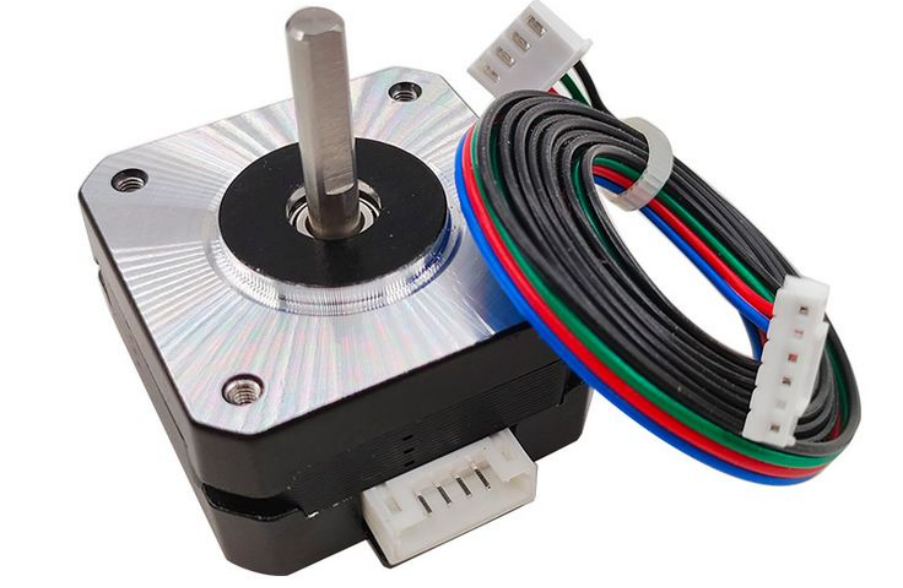
Rising star in the stepper motor field, Simtach has swiftly drawn attention for offering low-cost, trustworthy, high-performance motor alternatives. Simtach stepper motors, made for CNC machines, 3D printers, textile devices, and automated tools, mix accuracy, long life, and simple integration. As its catalog and consumer-oriented approach expand, Simtach is turning into a well-known brand among manufacturers searching for low-cost, precise control.
2. Oriental Motor
Particularly for its PK and CVK series, this top USA manufacturer, Oriental Motor, is quite well-known for its superb stepper engines. Widely employed in robotics, medical equipment, and semiconductor manufacturing, the company has built a superb name for delivering precise and consistent motion control answers. Additionally well-known for its extensive support and global distribution network is Oriental Motor.
3. Nidec Servo (formerly Japan Servo)
Nidec Servo offers a broad range of hybrid stepper motors and permanent magnet ones. Great torque ability and small size make Nidec’s products well known; they see extensive use in industrial tools, office automation, and healthcare technology. Their commitment to environmental sustainability and energy efficiency has made them a well-known brand in the field.
4. STMicroelectronics
Although primarily a semiconductor company, STMicroelectronics produces a range of integrated stepper motor drivers and controllers that pair with various motors from third-party manufacturers. Their L6470 and STSPIN series are industry standards, particularly in the development of smart stepper motor systems. Their chips are often used in DIY electronics, 3D printers, and robotics.
5. MOONS' Industries
MOONS’ Industries is a major Chinese manufacturer of stepper motors and motion control components. The company has gained global recognition for its advanced hybrid stepper motors, linear actuators, and integrated motor solutions. MOONS’ products are used in medical devices, laboratory automation, and LED lighting systems. Their partnership with global brands and continued investment in R&D ensure their relevance in an evolving market.
6. Kollmorgen
Kollmorgen is a U.S.-based manufacturer known for its advanced motion control technologies. Their PMX series of stepper motors is renowned for ruggedness, high torque output, and excellent low-speed performance. Kollmorgen motors are widely used in aerospace, defense, and high-end automation applications, where precision and reliability are critical.
Conclusion
Stepper motors continue to be a core component of motion control systems in such broad-based applications as automation, medical, robotics, and consumer electronics. Their accuracy, repeatable movements without feedback still make them a cost-effective, reliable option.
With advancing technology through the inclusion of smart features, miniaturization, and efficiency, it will continue to broaden applications. The current market remains competitive with both veteran players as well as new companies like Simtach offering innovative products.
 English
  Arabic
  Spanish
  Portuguese
  Italian
  French
  German
  Vietnamese
  Thai
Thai  Chinese
  Turkish
  Japanese
  Korean
  Russian