

Table of Contents
Servo motors and servo drives are absolutely important for automation and exact control. But what distinguishes them? Many individuals mix the two, believing they are the same. They cooperate but have quite different goals.
The variations in their functioning principles, structures, functions, and applications are explained in this paper. Whether you are an engineer, a hobbyist, or simply inquisitive, you will have a comprehensive knowledge of how these parts drive all from manufacturing robots to daily devices.
What Is The Difference In The Working Principle Between Servo Motors And Servo Drives?
Here is the difference between the working principle of servo motor and servo driver
1. How Servo Motors Convert Electricity into Motion
Servo motors convert electrical energy into exact mechanical motion. Inside, a DC or AC motor spins; an encoder or resolver registers location. This feedback loop guarantees the motor stops precisely where it should. Unlike conventional motors, which run constantly, servos change in real time for accuracy, making them perfect for CNC machines and robotics.
2. The Role of Feedback in Servo Motor Operation
Feedback sensors enable servo motors to achieve accuracy in the same way as encoders do. The device continuously monitors the motor position combined with velocity measurements, which it relays to the control system. The system immediately corrects the motor whenever it deviates from its path. These devices find their use in 3D printers and automated assembly lines because of their crucial closed-loop control system, which enables precise positioning.
3. How Servo Drives Process Control Signal
A PLC or motion controller sends low-power command signals to servo drivers. They then convert these signals into high-power currents to drive the motor. Imagine them as translators turning digital commands into actual movement. Lacking a drive, the motor would be unaware of how much torque or speed to deliver, hence causing inconsistent performance.
4. The Difference Between Open-Loop and Closed-Loop Systems
Standard motors perform through unconnected systems without utilizing any feedback components. Servo motors function through closed-loop systems since the drive makes continuous checks that lead to adjustments in performance. This increases their accuracy significantly. The drive system operates with certainty to fulfill speed requirements and angle position commands.
5. Why Servo Drives Adjust Voltage and Current
Servo drives serve to adjust operational parameters instead of delivering basic power output. The motor requirement determines how servodrives modify both voltage and current levels to provide smooth functionality including acceleration and torque management. The controlled output eliminates abrupt movements which extends the operating lifespan of the motor system. Servo systems deliver superior performance than basic motors when operating at high levels of precision.
What Are The Differences In The Composition Structure Between Servo Motors And Servo Drives?

1. How Servo Motors Convert Electricity into Motion
Servo motors convert electrical energy into exact mechanical motion. Inside, a DC or AC motor spins; an encoder or resolver registers location. This feedback loop guarantees the motor stops precisely where it should. Unlike conventional motors, which run constantly, servos change in real time for accuracy, making them perfect for CNC machines and robotics.
2. The Role of Feedback in Servo Motor Operation
Like encoders, feedback sensors are what give servo motors their accuracy. They constantly track the motor’s location and speed and provide data back to the controller. The mechanism fixes the motor right away if it strays off course. Servos are utilized in 3D printers and automated assembly lines, among other applications, because of this closed-loop control, which is crucial for precise positioning.
3. How Servo Drives Process Control Signal
A PLC or motion controller sends low-power command signals to servo drivers. They then convert these signals into high-power currents to drive the motor. Imagine them as translators turning digital commands into actual movement. Lacking a drive, the motor would be unaware of how much torque or speed to deliver, causing inconsistent performance.
4. The Difference Between Open-Loop and Closed-Loop Systems
Standard motors operate in open-loop systems; they spin without feedback. On the other hand, servo motors operate in closed-loop systems where the drive continuously monitors and modifies performance. This increases their accuracy significantly. Whether the motor is keeping a constant speed or stopping at a particular angle, the drive guarantees it follows orders exactly.
5. Why Servo Drives Adjust Voltage and Current
Servo drives fine-tune rather than convey raw power. Depending on the motor’s requirements, they change voltage and current for smooth acceleration, deceleration, and torque control. This avoids jerky motions and lowers wear, prolonging the motor’s life. That’s why, in high-precision applications, servo systems outperform simple motors.
What Are The Functional Differences Between Servo Motors And Servo Drives?
1. Motion Execution vs. Motion Control
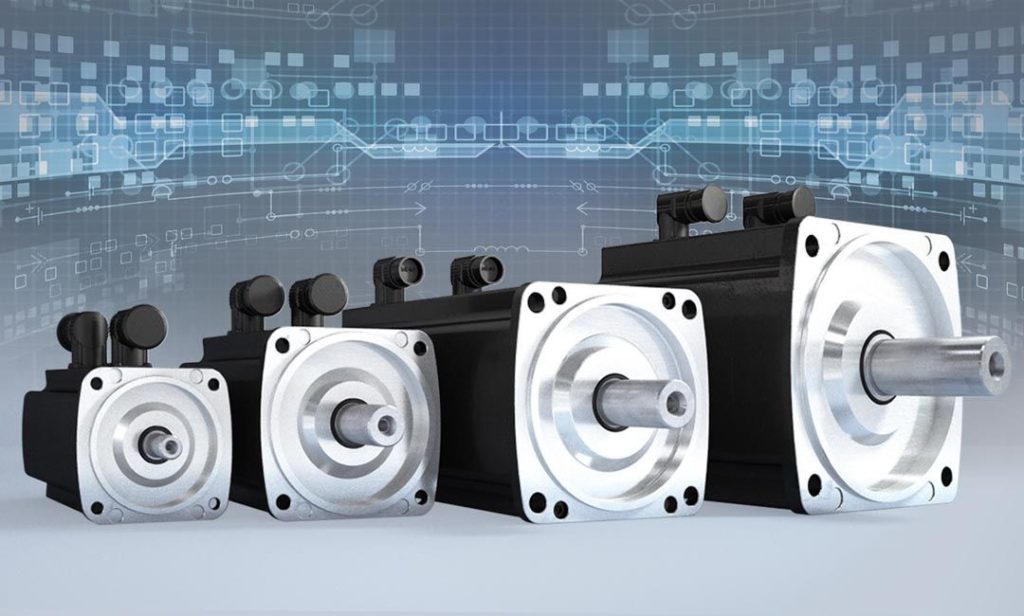
Servo motors physically carry out motions by turning electrical energy into mechanical rotation or linear motion. They are the workhorses that shift the components of machinery. However, servo drives are the smart controllers that decide how that motion should occur, computing the exact speed, position, and force required for every action.
2. Precision Positioning Capabilities
Although the servo motor offers the physical means for exact positioning, the drive enables this accuracy. To keep accuracy within fractions of a degree, the drive constantly receives feedback from encoders, adjusting the motor’s operation thousands of times per second.
3. Torque Control Mechanisms
The drive controls the torque with advanced algorithms even though the motor uses its electromagnetic architecture. Even under changing loads, the drive can keep constant torque by immediately changing the current to the motor windings, avoiding stalling or overshooting in important applications.
4. Dynamic Response Characteristics
Though their real reaction depends on the control capabilities of the drive, servo motors are made for fast acceleration/deceleration. Advanced drives can maximize motor performance by changing control settings in real-time depending on load situations and motion needs.
5. Energy Conversion Roles
While the drive controls this energy conversion process, the motor turns electrical energy into mechanical motion. By only delivering the precise amount of energy required for each movement, the drive guarantees efficient power use, hence lowering waste heat and enhancing general system performance.
What Are The Differences In Application Scenarios Between Servo Motors And Servo Drives?
1. Industrial Automation Applications
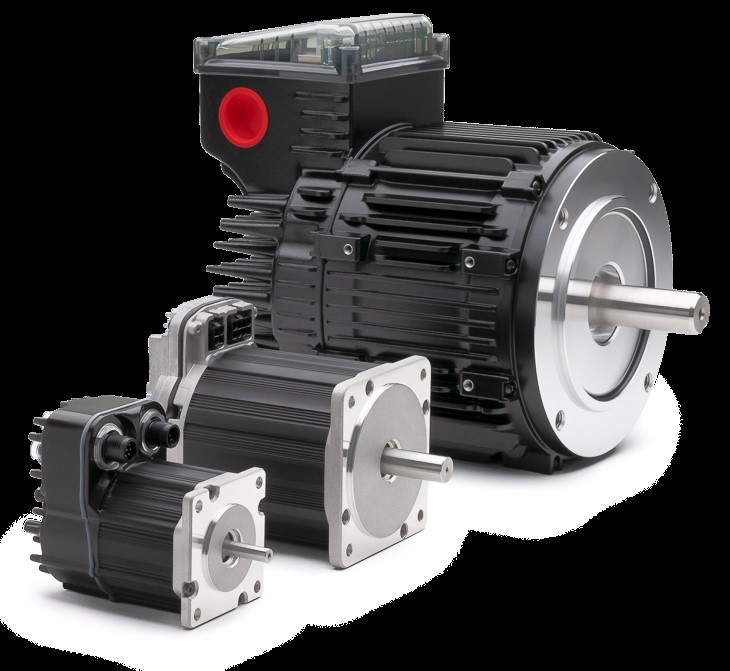
In automated manufacturing lines, servo motors are the parts driving conveyor systems and robotic arms. Usually located in control cabinets, the drives discreetly run several motors’ functions and interact with plant-wide automation systems via industrial networks.
2. CNC Machinery Implementations
Servo motors in CNC machines directly drive spindles and axis motions with micron-level accuracy. The matched servo drives convert complicated G-code commands into the precise motor motions required to manufacture detailed components.
3. Robotics and Articulated Systems
Each joint in robotic applications uses servo motors for fluid movement. To coordinate several motors concurrently while preserving ideal synchronization for smooth motion paths, the drives in these systems have to manage complicated kinematics computations.
4. Packaging and Material Handling
Precise product placement on high-speed packing processes depends on servo motors. Drives in these applications frequently include unique features such as electronic gearing and camming to synchronize several axes without mechanical connections.
5. Aerospace and Defense Uses
In aeronautical uses, servo motors drive control surfaces and systems. Their drives have to satisfy exacting dependability criteria and can have redundancy elements to guarantee ongoing performance in vital flight systems.
6. Medical Equipment Integration
Medical gadgets employ tiny servo motors for exact positioning in imaging systems and surgical robots. In these uses, the drives provide smooth motion and exact positioning precision,first priority over raw speed or power.
7. Consumer Electronics Applications
In consumer goods, small servo motors run camera systems and disk drives. Often included in the primary control boards, their little drives are designed for cost and space savings rather than industrial durability.
What Conclusions Can Be Drawn From The Comparison Between Servo Motors And Servo Drives?
1. The Symbiotic Relationship in Motion Control Systems
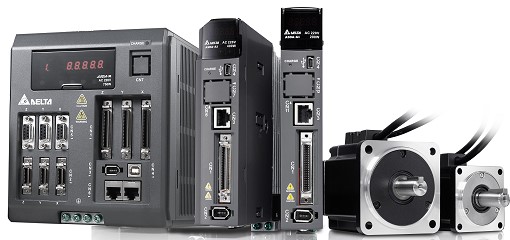
Drives and servo motors create a close relationship in which every part improves the capacity of the other. While the drive provides intelligence, the motor provides physical motion, therefore producing a system that is more than the sum of its components. This combination provides the accuracy and dependability modern automation requires.
2. Performance Optimization Through Proper Matching
Choosing mismatched parts could reduce system performance by 30 to 50%. A premium motor combined with a poor drive (or vice versa) causes limitations in response time, accuracy, and energy efficiency. Building or upgrading systems calls for constant reference to manufacturers’ compatibility charts.
3. The Cost of Imbalance in System Design
Studies in the industry indicate that incorrect motor-drive pairing raises maintenance costs by as much as 40% and shortens equipment life. Overworking any component causes early wear; motors suffer mechanical failure, and drives experience electronic component stress.
4. Future-Proofing Your Automation Investment
Modern servo systems are developing toward integrated motor-drive units combining both components in separate packaging. Still ruling in heavy industrial applications, conventional separate setups provide more flexibility in customizing and maintenance choices.
5. The Maintenance Implications of Component Roles
While drives need electrical maintenance (firmware upgrades, capacitor replacement), servo motors usually require mechanical maintenance (bearings, brushes, cooling). Knowing these variations guides spare parts stocks and preventive maintenance planning.
6. Energy Efficiency Considerations
When correctly matched, high-efficiency servo motor and drive combinations can cut energy use by 15-25% relative to mismatched systems. Overall system performance is greatly influenced by the drive’s capacity to regulate power distribution.
7. The Evolution of Smart Motion Control
Emerging Industry 4.0 trends are driving both motors and drives toward smarter designs with built-in diagnostics and IoT connectivity. Future systems should include more integration between these parts for predictive maintenance and adaptive control.
What Are The Well-Known Brands Of Servo Motors And Servo Drives?
1. The European Powerhouses: Siemens and Schneider Electric
Dominating European industrial markets, Siemens’ Simotics and Schneider Electric’s Lexium series provide motors with accuracy down to ±1 arc-minute. Their drives are ideal for factory automation solutions since they fit perfectly with PLC systems.
2. Yaskawa and Mitsubishi: Japanese Precision
Particularly for robotics and CNC applications, Yaskawa’s Σ-7 motors and Mitsubishi’s HG series set the gold standard in Asian markets. These brands provide some of the smallest yet strongest servo solutions.
3. American Industrial Giants: Allen-Bradley and Baldor
Rockwell Automation’s Allen-Bradley Kinetix drives and Baldor Flex motors are Staples in North American manufacturing. Renowned for robust endurance, they excel especially in demanding settings as metal processing factories and paper mills.
4. Specialized Performance: ESI Motion and Parker Hannifin
ESI Motion’s durable drives resist severe aerospace and defense situations. Parker Hannifin’s Bayside motors shine in high-torque, low-speed applications where accuracy counts most.
5. Asian Value Leaders: Delta and Omron
Popular selections for mid-range automation projects are Delta’s ASDA drives and Omron’s R88D series, which provide great performance-to-price ratios. These companies excel especially in semiconductor manufacture and packaging.
6. Emerging Contenders in the Global Market
Competitively priced substitutes from Chinese companies like Estun and Inovance are increasing market share. Though not yet on par with premium brands in performance, they have greatly narrowed the quality gap in recent years.
7. Choosing the Right Brand for Your Application
Selection criteria should take into account:
● Industry-specific performance criteria
● Current automated systems
● Availability of local services and support
● Total cost of ownership instead of only initial price
Many leading companies provide online selection tools to assist fit parts to certain application requirements.
Conclusion
Knowing the distinctions between servo motors and servo drives helps one choose the appropriate parts for any project. Drives guarantee exact control; motors handle movement. From factory robots to daily electronics, modern automation is powered by them both working together.
Knowing these distinctions provides you an advantage whether you are wondering about how things operate or upgrading equipment. Performance and efficiency are greatly influenced by the correct mix of servo motors and servo drives.
 English
  Arabic
  Spanish
  Portuguese
  Italian
  French
  German
  Vietnamese
  Thai
Thai  Chinese
  Turkish
  Japanese
  Korean
  Russian