
Table of Contents
Servo motors are everywhere—from the robotic arms assembling cars to the precise movements of a 3D printer or even the autofocus mechanism in your camera. Have you thought about how it works? In contrast to regular motors, which simply rotate whenever power is applied, servo motors are controlled for movement, accuracy, and the ability to do so repeatedly.
This kind of motion is provided in response to control signals and feedback systems in somewhat more specialized ways, finding use in automation, robotics, and aerospace. In this age of speed and precision, understanding the workings of a servo motor will prove paramount for any student, engineer, or DIY enthusiast.
This fast-fact guide renders the working of a servo motor, how it differs from an ordinary motor, what it consists of, types, uses, pros, and cons. So, if that sounds appealing to you, let’s get to know the very things that make servo motors so important.
Part 1: What is a servo motor?
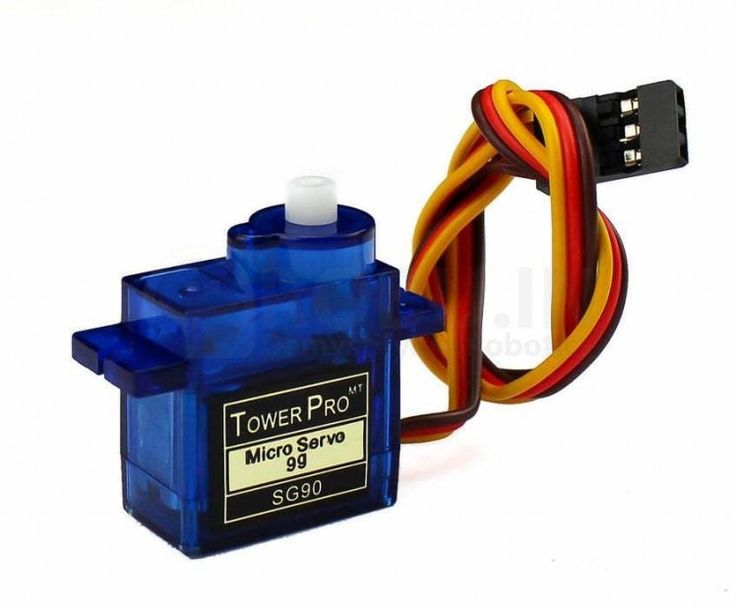
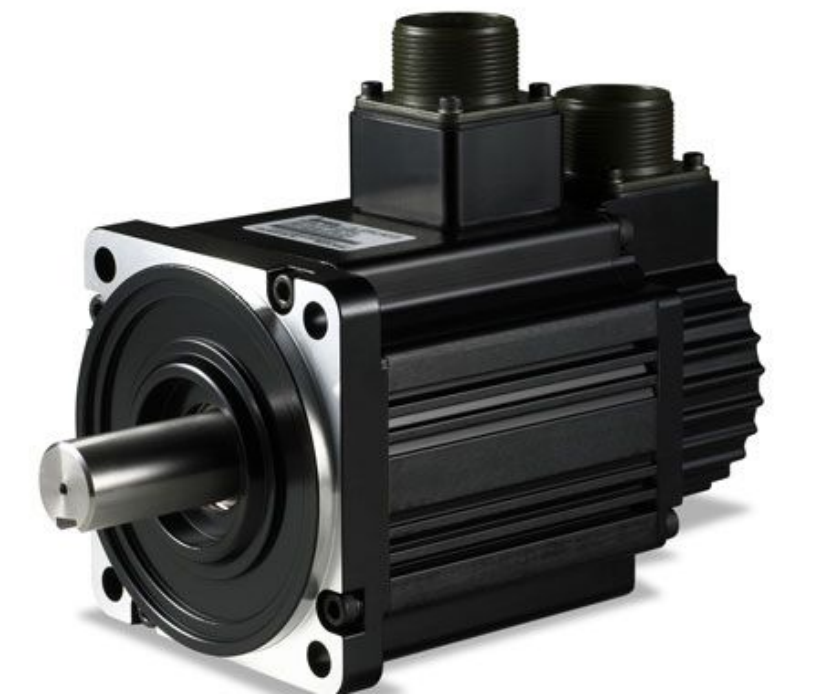
A servo motor is a rotary or linear actuator that permits high precision control in angular or linear position, velocity, and acceleration settings. They are generally used wherever accuracy and control are of prime importance.
Unlike regular motors, which just rotate when energized, a servo motor works within a closed-loop system, implying that the motor is constantly fed with positional feedback and can adjust itself accordingly to achieve the demanded output.
In simple terms, a servo motor consists of a motor coupled with a sensor, which can be an encoder or a potentiometer, and control electronics. Upon receiving input signals (generally coming from a controller or microcontroller), the control circuit compares the instruction with the motor’s actual position received from the sensor and accordingly makes adjustments in the motor motion. Hence, such adjustment occurs constantly to ensure the motor stops at a certain angle so that the position remains very stable, even against landscape changes or environmental disturbances.
Part 2: How to distinguish between servo motors and ordinary motors?
At first glance, ordinary motors and servo motors could seem comparable, but in terms of control, performance, and use, they vary greatly. Here is how you might differentiate them:.
1. Control System
Basic AC or DC motors (ordinary motors) function using an open-loop system, which means they get power and just run without any feedback or monitoring. Conversely, servo motors operate in a closed-loop system, always getting feedback from an internal sensor (such as an encoder or potentiometer). This input lets servo motors keep exact control over position, speed, and torque by adjusting in real-time.
2. Accuracy and Precision
Designed for continuous rotation, ordinary motors are perfect for simple jobs where accuracy isn’t a top priority, such as running pumps, fans, or household appliances. Conversely, servo motors are made for accuracy. Ideal for robotics, CNC machines, and automation, they can stop and maintain that position and rotate to a precise angle.
3. Movement Control
Regular motors cannot accurately position themselves; they spin freely as long as power is provided. Conversely, servo motors can move to and maintain a particular position, precisely reacting to control signals and environmental input.
4. Cost and Complexity
Generally speaking, ordinary motors are more affordable and simpler to install. They don’t need sophisticated sensors or circuitry. Conversely, servo motors are more complex, using precise programming, controllers, and sensory devices. Though this makes them more expensive, it also makes them much more suited for challenging conditions.
5. Reaction to load variations
Many ordinary motors sometimes lose torque or slow down when the load varies. Conversely, servo motors use constant feedback and adjustment to automatically correct variations, therefore preserving regular performance.
Comparison Table
Feature | Ordinary Motors | Servo Motors |
Control System | Open-loop (no feedback) | Closed-loop (uses feedback for control) |
Precision | Low precision; continuous rotation | High precision; can move to and hold a specific position |
Movement Type | Free and continuous rotation | Controlled, limited, and accurate movement |
Position Control | Not possible | Highly accurate position control |
Feedback Mechanism | Not included | Includes an encoder or sensor for real-time feedback |
Response to Load Changes | Performance may vary with load | Automatically adjusts to maintain performance |
Part 3: What are the components of servo motors?
A servo system operates on an enclosed-loop control system for exact positioning, speed, or torque regulation. Below are the paramount components of a typical servo system:
1. Servo Motor
The servo motor acts as the mechanical actuator, converting electrical signals into controlled mechanical motion. Depending on the specific application, the motor may be of the AC or DC type.
Brushless AC servo motors are widely preferred due to their high efficiency, durability, and superior torque performance. They enable precise movement and stable operation, which are critical in applications requiring high positional accuracy.
2. Servo Drive (Amplifier)
The servo drive or amplifier regulates the power sent to the motor. It receives command signals, usually from a central motion controller or PLC, and commands the voltage and current supplied to the motor by feedback from the motor to maintain control of speed, torque, and direction.
When contrasted with earlier servo drives, modern drives incorporate some advanced features such as auto-tuning, diagnostics for faults, and digital communications, all of which improve integration within a control system and ultimately increase the system’s reliability.
3. Feedback Device (Encoder or Resolver)
The feedback loop is a crucial component of servo systems. Real-time information on the position, speed, and direction of the motor is provided by feedback devices such as encoders or resolvers. This data is returned to the servo drive and motors, which evaluate it against the desired values and adjust as needed. Ultra-precise motion control made possible by high-resolution encoders is crucial for industries such as CNC milling or robotics.
4. Controller: Motion Controller or PLC
By producing motion profiles and analyzing feedback, the controller coordinates the whole system. It ensures that every movement is coordinated, sets operational parameters, and interacts with the servo drive. Advanced motion controllers or industrial PCs are used in complex systems to run complex algorithms for multi-axis coordination.
Part 4: What is the Working Principle of a Servo Motor?
How It Works:
1. Input Signal
This describes the command signal that instructs the actuators or servo motors to move to a position or rotate at a speed. The signals generated could either be Pulse Width Modulated (PWM) signals from the controller or a digital command from devices such as a PLC or microcontroller.
2. Comparison & Control
The command goes to the servo drive; the drive also gets instant feedback from the position sensor, which can be an encoder or potentiometer attached to the motor shaft. It compares the reference position/speed coming from the input and the actual position/speed coming from feedback.
3. Error Correction
Now, if a difference is observed between the desired values and the actual position, which makes it an error, such an error would help the control circuit decide to increase or decrease the power supply given to the motor. This continues until the error is annulled or greatly reduced.
4. Movement
Accordingly, the motor will now respond by accelerating, decelerating, or simply holding position until unspecified outcomes are completed. If the load changes, the system immediately identifies the disturbance and adapts to counteract the change.
Part 5: What are the different types of servo motors?
1. DC Servo Motor
DC servo motors are one of the earliest implementations of servomechanisms that are activated by a particular frequency of input electrical signals. Due to their rapid response, precise positioning, and start-stop control, these devices have become increasingly popular.
Being responsive and simple in design, these motors are found in a myriad of applications like CNC machines, automatic doors, and various industrial processes where speed maximization or controlled positioning is required.
2. AC Servo Motor

Being more flexible in its operation, AC servo motors enjoy control over voltage and frequency modulation in their control methods. Movement, speed, and position require the highest degree of precision, which makes AC servo motors fit for applications in robotics, automatic systems, and high-performance CNC machinery.
3. Positional Rotation Servo Motor
This is the most commonly used servo motor in consumer and industrial products. It rotates the output shaft to a position within 180 degrees, limited mechanically internally to prevent damage to the feedback sensor from over-rotation.
Positional rotation servo motors are used in remote-controlled cars, airplanes, robotic arms, and toys where angular motion needs to be performed at precise intervals.
4. Continuous Rotation Servo Motor
Unlike the positional variant, the continuous rotation servo motor can rotate indefinitely in either direction. The control signal governs the direction and speed of rotation, making it suitable for applications requiring full 360° movement, such as robotic wheels, conveyor belts, or pan-tilt mechanisms.
5. Linear Servo Motor
A linear servo motor converts rotary motion into back-and-forth linear movement using a specialized gear mechanism. This type is particularly useful in CNC systems, where precise linear guidance across surfaces, such as those on a downdraft or laser cutting table, is essential. It offers accurate and smooth motion for tasks that require exact positioning along a straight path.
Part 6: What are the common application areas?
These are some of the most often used application areas:
1. Industrial Automation and Robotics
Robotic arms, automated assembly lines, and pick-and-place devices all use servo motors extensively. Their exact control lets robots consistently carry out sensitive and sophisticated work. In manufacturing, servo motors are positioned to control conveyor belts, position tools, and automate repetitive operations.
2. CNC Machinery
CNC machines use servo motors to precisely drive cutting tools and worktables. Whether milling, drilling, or laser cutting, servo motors guarantee slick, highly regulated movement along every axis.
3. Aerospace and Air travel
Flight control systems, which include altering flaps, rudders, and landing gear systems, depend heavily on servo motors. Simulators and remote-controlled planes, where precision and fast responsiveness are critical for safety and performance, also include them.
4. Medical Devices
Surgical robots, infusion pumps, prosthetic legs, and diagnostic imaging equipment all run on servo motors. Patient safety and correct results depend on exact control and smooth operation in these sensitive uses.
5. Consumer gadgets and toys
From robotic vacuum cleaners and digital cameras to remote-controlled cars and drones, servo motors abound in our daily lives. They are small enough to fit into small devices and enable smooth, programmable movement.
6. Auto Industry
Servo motors are used throughout automatic window systems, throttle control, power steering, and cruise control. By automating exact motions and adapting systems depending on real-time input, they improve vehicle performance.
7. Textile and Packaging Industries
In industries including food packaging and textile manufacturing, servo motors guide cutting, sealing, labeling, and weaving processes. Their quick, precise motion guarantees output and helps to reduce waste.
Part 7: What are the advantages and disadvantages of servo motors?
Advantages of Servo Motors
- 1.Servo motors offer high precision and accuracy.
- 2.They respond quickly to control signals.
- 3.They provide consistent torque across a wide speed range.
- 4.Servo motors are energy-efficient.
- 5.They support closed-loop control for real-time feedback.
- 6.They are suitable for both linear and rotational motion.
- 7.Servo motors are compact and lightweight.
- 8.They have low noise and smooth operation.
Disadvantages of Servo Motors
- 1.Servo motors are more expensive than standard motors.
- 2.They require complex control systems.
- 3.Overheating can occur under prolonged heavy loads.
- 4.They can be sensitive to electrical noise.
- 5.Maintenance is needed for components like encoders.
Conclusion
Modern automation and precision control systems, in conclusion, rely increasingly on servo motors. From consumer electronics and aviation to CNC milling and robotics, their ability to deliver exact, rapid, and efficient motion control makes them priceless in every sector. Unlike traditional motors, servo motors’ closed-loop feedback guarantees consistent performance across varying loads and settings.
Though they could need more advanced systems and a bigger upfront cost, the long-term benefits in accuracy, reliability, and energy economy usually outweigh these negatives. As technology advances, servo motors will stay at the heart of innovation, driving faster, more precise machines that support progress in both business and everyday settings.
 English
  Arabic
  Spanish
  Portuguese
  Italian
  French
  German
  Vietnamese
  Thai
Thai  Chinese
  Turkish
  Japanese
  Korean
  Russian