
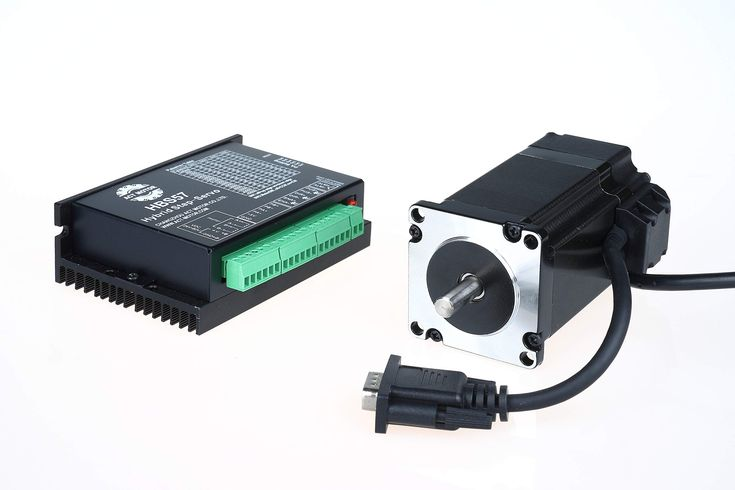
Table of Contents
Do you want to invest in Closed-Lopp Stepper motors, and you don’t know where to start? Worry no more! We’ve got you covered.
Stepper motors are traditionally employed in motion control systems for their precise and repeatable movements without the need for a cumbersome feedback system. Yet, an open loop can suffer from situations such as missed steps, overheating, or loss of torque at high speeds. Closed-loop stepper motors solve this problem.
Given that industries are increasingly demanding smarter automation solutions with reduced downtime and higher precision, closed-loop stepper motors are being widely used in CNC machining, robotics, medical devices, 3D printing, and packaging. This buying guide will take you through everything you need to know about Closed-loop Steppers. Let’s get started!
Part 1: What is a closed-loop stepper motor?
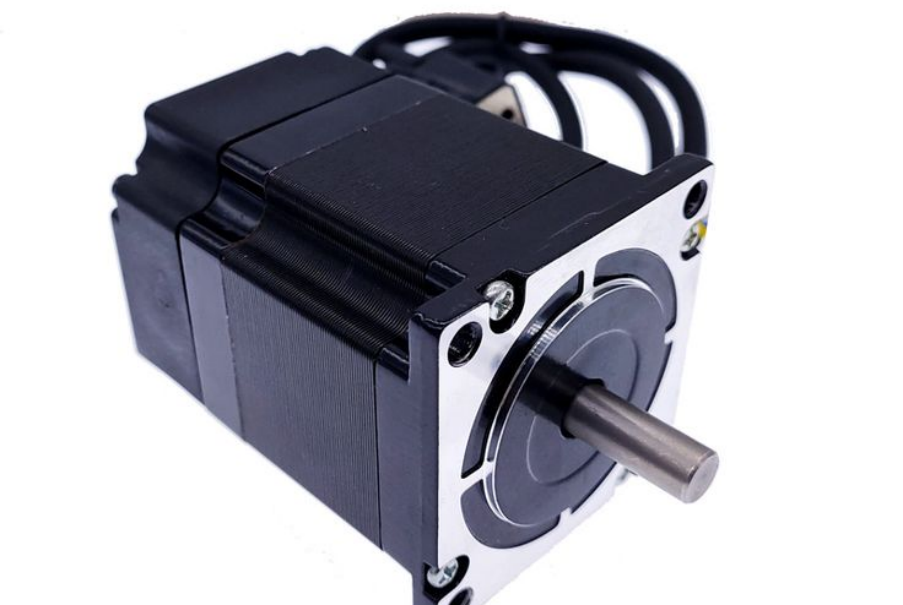
The name Closed-Loop Stepper Motor refers to an advanced motion control device that marries the step-by-step, accurate action of a traditional stepper motor with position feedback in real-time, which is commonly offered by an encoder. While open-loop stepper motors do not assume any missteps are made and that every given step command is followed to the letter, closed-loop systems monitor the actual position of the rotor and align motor performance with the speed that has been commanded.
Closed-loop stepper motors with feedback assist the motor controller in detecting what is called a missed step, and under variable load or high-speed applications, compensate for it to assure actual positioning. This increased positioning capability, resultant from the feedback loop, enables the inside-stepper motors to provide so doing better reliability, smoother motion, and greater torque at higher speeds than those of open stepper motors.
Part 2: Types of closed-loop stepper motors
Here are some of the types of Closed-Loop stepper motors:
1. Integrated Closed-Loop Stepper Motors
Integrated closed-loop stepper motors merge the drive electronics, encoder, and motor into a single, small package. This all-in-one design helps to cut the system footprint, simplifies installation and cabling, and frequently incorporates built-in intelligence, including autotuning and fault diagnostics. For exact positional feedback, these motors often have optical or magnetic encoders mounted right on the rotor shaft.
Pros
● Less wiring intricacy and simplified system design
● Factory-optimized adjustment and calibration
● Small size is appropriate for situations needing spatial restriction
2. Stepper Systems of Modular Closed Loop
In modular systems, the motor, encoder, and drive are independent components that can be chosen and assembled depending on the needs of the application. This adaptability lets engineers customize the solution by selecting motor frame sizes, encoder resolutions, and drives with particular control interfaces.
Pros
● Adjustable to particular torque, velocity, and feedback demands
● Replacing or updating particular components is simpler.
● Ideal for sophisticated or high-performance uses
3. Hybrid Step Servo Motors
These use permanent magnets and digital control techniques to offer smooth, continuous rotation free of distinct steps while preserving precise positional control, unlike conventional stepper motors.
Pros
● Very low vibration and noise
● The density of high efficiency and torque
● Wonderful dynamic response and fluid motion.
4. Low Voltage vs. High Voltage Closed Loop Steppers
Open-loop stepper motors come in low-voltage as well as high-voltage versions:
● Low-Voltage Systems (≤48 VDC): Safer and easier to power; suitable for moderate-speed applications.
● High-Voltage Systems (>48 VDC, up to 300 VDC): Provide faster current chopping and improved performance at higher speeds and torque, but require more complex power supplies.
Part 3. How to choose the model of a closed-loop stepper motor?
Here are some of the things one should consider when choosing the model of a closed-loop stepper motor:
1. Calculate Torque and Load Requirements
Begin with the calculation of the torque necessary to drive the load. Static torque must be considered in holding the load in position, while dynamic torque is required to accelerate, decelerate, or cause its passage through a load motion cycle. Loads involving vertical motions or weighting will require increased torque margins.
Select a motor with a torque at least 20–30% more than that required. This additional gap gives room for unexpected load variations or system inefficiencies, ensuring a more satisfactory motor output when working close to its base rating under continuous operation or varying conditions.
2. Analyze Speed and Motion Profile
Further, before you define your motion requirements, consider operating speed, duty cycle, and the nature of motion (continuous, intermittent, or oscillatory). Other applications may require low-speed, high-torque outputs; some involve rapid direction changes with fast accelerations.
Generally speaking, closed-loop steppers would typically maintain torque better than open-loop models at higher speeds, but performance still varies between models; check the torque-speed characteristic from the manufacturer to ensure the torque is sufficient at the speed range you require.
3. Choose a Suitable Frame Size and Shaft Type
Closed-loop stepper motors are manufactured in industry-standard frame sizes such as NEMA 17, NEMA 23, NEMA 34, and NEMA 42. The selection depends upon your available space, the torque needed, and the mounting configuration of the system.
Also, observe the shaft specifications. Select between single or double shaft, keyed or smooth, and observe the shaft diameter and length to fit mechanical couplings or gears. Ensure that the mounting flanges conform to your machine for a smooth installation.
4. Select a Suitable Encoder
This encoder is very important in any closed-loop system because it provides feedback about the actual position of the motor in real-time. Now, you will be able to encounter mainly two types: incremental and absolute encoders. Incremental ones are cheaper and fit most applications, but require homing each time they power up. Absolute ones keep track of the position even after the loss of power and hence are more suited for high-end or multi-axis systems.
Think of the encoder’s resolution, that is, CPR or Counts Per Revolution. More counts will deliver more accurate feedback and result in a finer movement, smooth application being one of those that require accuracy, such as CNC machining or 3D printing.
5. Choose a Drive Appropriate for the Motor
Any closed-loop stepper motor must have a driver/controller compatible with the motor’s electrical and feedback parameters. The driver needs to be rated for at least the voltage and current rating of the stepper motor being used, and respond accordingly to the type and resolution of the signal from the encoder.
Communication interfaces are also important. Many drives provide pulse/direction control; some also support serial protocols such as RS-485, Modbus, or industrial Ethernet (e.g., EtherCAT, CANopen).
Check the communication interface, too. Various drives will offer pulse/direction control, and others will make use of serial protocols like RS-485, Modbus, or industrial Ethernet (EtherCAT, CANopen). A higher-end drive could offer PID autotuning, built-in error detection, alarm output, and stall prevention, which can improve the motion control accuracy and system safety.
6. Environmental and Application Conditions
Last but not least, you need to consider the environment in which the motor is to work. In a dusty, humid, or chemical environment, consider using a motor rated for Ingress Protection of IP65 or higher. For high-temperature or vibration-prone situations, look for those that have strong construction, thermal protection, and vibration-resistant components.
When considering environmental conditions and application requirements, you may also need to evaluate additional features such as braking for vertical loads, fan-cooling for heat-sensitive environments, or shielding from electromagnetic interference.
Part 4. Price estimation for closed-loop stepper motors

Prices vary significantly based on performance, integration level, and brand reputation. Below are ballpark ranges in USD per axis (motor + encoder + drive) as of mid-2025:
Category | Motor Size | Encoder | Drive Type | Price Range (Unit) |
Integrated Low-Voltage | NEMA 17 | Incremental 1000 CPR | Dedicated onboard | $250 – $400 |
Integrated High-Voltage | NEMA 23 | Incremental 2000 CPR | Onboard, 150 VDC | $400 – $650 |
Modular Low-Voltage | NEMA 23 | Absolute 12-bit | Pulse/Dir drive | Motor $120 + Encoder $80 + Drive $200 |
Modular High-Voltage | NEMA 34 | Absolute, 16-bit | EtherCAT drive | Motor $250 + Encoder $150 + Drive $450 |
Premium Step-Servo Hybrid | Custom | High-res absolute | Digital servo | $1,000 – $2,000 |
Part 5. Where to Buy Closed-Loop Stepper Motors?
Closed-loop stepper motors abound from several places, including direct manufacturers, specialized motion control dealers, and online sources. Your particular demands will determine where you decide to purchase—whether it be cost-effectiveness, quick delivery, technical support, or access to customized solutions.
1. Directly from producers
If you require bespoke configurations, bulk pricing, or in-depth technical assistance, buying directly from manufacturers is best. Reputable motor producers like Simtach Motor provide a range of high-performance closed-loop stepper motors with thorough specifications, datasheets, and professional advice. Direct buying also guarantees product authenticity, quality control, and availability of the most recent technologies or firmware updates.
2. Authorized Distributors
Often carrying several brands and motor kinds, authorized industrial automation vendors Local inventory, technical advice, and occasionally presale assistance are provided by these companies to aid you in selecting the best model. Known for worldwide reach and fast delivery, distributors such as DigiKey, Mouser, and RS Components abound.
3. Online Marketplaces
Often at affordable prices, platforms such as Alibaba, Amazon, and eBay offer a great range of closed-loop stepper motors. Though their quality and genuineness can differ, these fit prototyping or hobby projects. Before buying, always verify warranty conditions and check provider ratings and consumer reviews.
4. Local Automation Suppliers
Local automation or motion control providers may provide rapid answers if you would rather meet face-to-face or have to replace things quickly. They sometimes keep stock of well-known motor models and give installation services.
Part 6. Closed-loop stepper motor supplier rankings in 2025
The worldwide market for closed-loop stepper motors is booming as of 2025, with several major companies spearheading innovation, product quality, and customer service. Based on reliability, product range, and international reach, the top-ranked closed-loop stepper motor suppliers are shown below.
1. Simtach Motor (Our Recommendation)
Rapidly becoming a leading player in precise motion control is Simtach Motor. With integrated encoders and smart drives, the firm offers a whole line of closed-loop stepper motors. Simtach motors are extensively used in robotics, CNC, packaging, and automation systems because of their reasonable pricing, great customization support, and long-lasting designs. Companies looking for inexpensive, high-quality motor solutions increasingly choose Simtach for their technical know-how and global reach.
2. Leadshine Technology
Originating in China, Leadshine is among the most well-known companies in the motion control industry. Robust, simple to integrate, and providing outstanding speed-to-torque performance, their closed-loop stepper motors are ideal. Leadshine is much praised for its thorough documentation, global availability, and dependable client service. From textile machines to industrial 3D printers, their motors may be seen everywhere.
3. Oriental Motor
Oriental Motor (Japan), with a long history dating back over a century, provides highly engineered closed-loop stepper systems that show off low-noise, energy-efficient applications. Their AlphaStep line has sophisticated feedback control for seamless, high-precision movement. Oriental Motor’s outstanding construction quality and long lifespan make them perfect for medical, semiconductor, and laboratory equipment.
4. MOONS Industries
With a substantial presence in North America, Asia, and Europe, MOONS is a global motion control producer. Their closed-loop stepper motors are highly customizable, small, and energy-efficient. Making them ideal for smart manufacturing and Industry, MOONS also provides integrated solutions with built-in drivers and networking choices like EtherCAT and CANopen.
5. Applied Motion Products
Located in the US, Applied Motion Products focuses on closed-loop stepper systems meant for industrial automation. Their integrated motors support several communication protocols (Modbus, Ethernet/IP, CANopen) and provide simple-to-use configuration tools. Renowned for dependability and cutting-edge features, Applied Motion motors are frequently employed in medical devices, test equipment, and factory automation.
Conclusion
There you have it, all you need to know about stepper motors. Because of their accuracy, dependability, and capacity to overcome restrictions of conventional open-loop systems, closed-loop stepper motors have become indispensable in modern automation.
Choosing the proper closed-loop stepper motor guarantees smoother motion, greater torque performance, and real-time feedback control, whether you are building a CNC machine, robotics system, or industrial automation system. Therefore, get the right model from a reliable source that will help you to invest in long-term operational efficiency and system stability for your automation needs in 2025 and beyond.
 English
  Arabic
  Spanish
  Portuguese
  Italian
  French
  German
  Vietnamese
  Thai
Thai  Chinese
  Turkish
  Japanese
  Korean
  Russian