

Table of Contents
Knowing the variations between stepper motors and servo motors will help you choose the correct motor for your project or application. Although developed to fulfil different purposes, both motors have significant roles in engineering and automation. The main differences between stepper motors and servo motors, their operating principles, accuracy, performance, and their uses in practical situations, will be discussed in this paper This will enable you to decide with knowledge depending on your demand.
What is a Stepper Motor?
An electromechanical tool, a stepper motor turns digital pulses into exact mechanical motions. Stepper motors’ basic characteristic is their capacity for discrete step rotation. Every pulse or signal delivered to the motor produces a consistent angular movement, usually ranging from 0.9° to 1.8°. Without feedback systems, this exact control made possible by step-by-step rotation allows When exact positioning is required without sophisticated control systems, stepper motors are perfect.
How Do Stepper Motors Work?
A stepper motor runs essentially on electromagnetic attraction and repulsion. Often a permanent magnet or soft iron core, the rotor of the motor interacts with the stator coils energized one after the other. This lets the rotor turn in discrete increments, enabling exact and repeatable motion. Every step guarantees exact control by matching a set angle.
Types of Stepper Motors
Each of the numerous kinds of stepper motors has special qualities. The three most often occurring varieties are hybrid, variable reluctance (VR), and permanent magnet (PM). Often selected for lower-speed, lower-torque uses, PM motors run on magnetic rotors. Although VR motors offer modest torque, their soft iron rotors allow great speeds. With low step angles and great torque, hybrid motors combine the greatest qualities of PM and VR models.
Benefits of Stepper Motors
Stepper motors typically offer excellent precision and the capacity to hold positions without constant power. For uses where keeping a certain position is crucial, this makes them perfect. In some situations, they also are less costly to run and easier to manage as they do not call for feedback systems.
Common Applications of Stepper Motors
Applications requiring exact positioning abound in which stepper motors find usage. Three-dimensional printers, CNC equipment, and scientific tools are among the most often used ones. These systems sometimes have to move in discrete steps, hence stepper motors are perfect for these jobs as they are so simple. In systems like medical equipment and mechanized machinery, their capacity to hold a position without using additional power makes them very valuable.
Advantages and Disadvantages of Stepper Motors
Stepper motors have certain restrictions even if they provide tremendous precision. Higher speeds may cause them to lose torque, and they could have resonance problems. Higher resolution and smoothness call for more sophisticated control systems as well, which stepper motors could necessitate. Still, for many uses their low cost, simplicity, and capacity to retain a position make them perfect.
What is a Servo Motor?
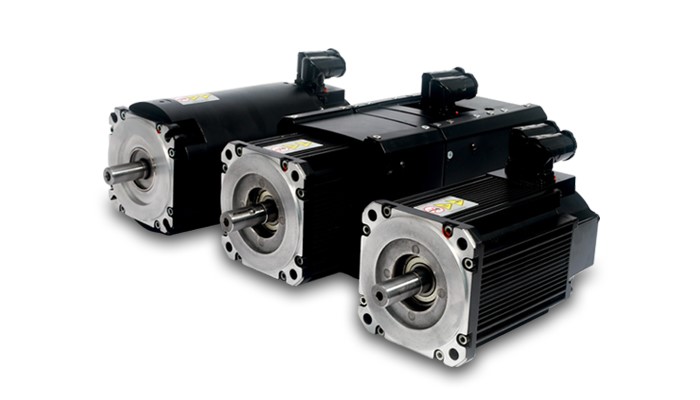
Conversely, a servo motor is a more advanced motor runs inside a closed-loop control system. Using feedback from an encoder or resolver connected to the motor, it thus constantly changes its location, speed, and torque. Servo motors may move smoothly and continuously unlike stepper motors, which run in set steps. Highly flexible to dynamic situations and different loads, the feedback loop guarantees that the motor keeps the correct position and speed.
How Do Servo Motors Work?
Operating on a closed-loop system, a servo motor continuously gets input from sensors—such as encoders or resolvers. This input signals the control system of the motor whether it requires adjustment or is in the proper position. Perfect for dynamic uses needing constant changes, the motor modulates its movement to guarantee it reaches the intended position or speed.
Types of Servo Motors
Two main varieties of servo motors exist: DC and AC ones. Because of their higher power output, speed, and efficiency, AC servo motors are increasingly found in industrial environments. Conversely, DC servo motors are usually found in smaller, battery-operated devices since they are simpler to operate and usually have less power requirements.
Benefits of Servo Motors
Servo motors’ main advantages are their great efficiency, flawless operation, and load adaptation. For high-performance uses such robotics, automated manufacturing, and aerospace systems, their ability to constantly change their posture and preserve high torque even at different speeds makes them perfect. Under load as well, the feedback loop lets servo motors operate with great repeatability and accuracy.
Common Applications of Servo Motors
Applications where exact speed control and great performance are needed make great use of servo motors. These cover automated systems, CNC machine tools, and industrial robotics. Where a smooth and continuous motion is crucial, servo motors are also widely utilized in applications including flight control systems, camera stabilization, and semiconductor manufacture.
Advantages and Disadvantages of Servo Motors
Although speed, accuracy, and adaptability are major benefits of servo motors, their more complicated control systems and higher prices offset any advantages. Feedback devices like encoders and more advanced drivers raise system complexity and cost depending on their necessity. Nevertheless, in dynamic and high-speed conditions these motors offer unparalleled performance, which justifies their price in many professional uses.
What Are the Differences in the Working Principles of Stepper Motors and Servo Motors?
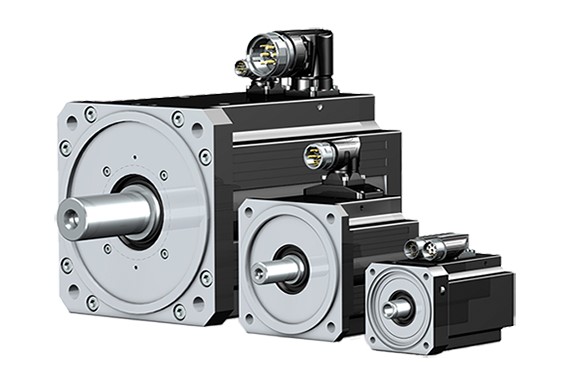
Stepper motors and servo motors differ fundamentally mostly from one another in their control mechanisms. Using an open-loop approach, stepper motors let the number of steps given to them define the motor’s position. This simplifies and lowers the cost of the system; nevertheless, if the motor operates too quickly or is overworked, skipped steps can result.
Open-Loop vs Closed-Loop Control Systems
Among stepper motors’ defining features is its open-loop control mechanism. It lowers expenses and lets simpler designs possible. By contrast, servo motors use a closed-loop approach whereby continuous feedback guarantees the motor runs with more accuracy and performance. This input lets servo motors real-time react to changes in load, speed, and position.
Stepper Motors’ Step-by-Step Movement
Usually 1.8° per step or less, depending on the motor type, stepper motors run in discrete steps. In small increments, this makes them quite accurate. But since their movement is discontinuous, operation may be less smooth than that of servo motors, which thanks to their feedback mechanism can move continuously and smoothly.
Continuous Feedback in Servo Motors
Servo motors are notable for their capacity to continuously change their position depending on real-time input. Attached to the motor shaft, an encoder or resolver provides this feedback therefore enabling the system to make exact changes. Because of their closed-loop character, servo motors excel in applications needing consistent speed and position control. Stepper motors
Impact on Performance Under Load
Especially at higher speeds, stepper motors are more prone to lose steps or torque as the load rises. Because of their continuous feedback and closed-loop control, servo motors can manage changing loads without sacrificing performance. For high-speed applications or when exact control under different situations is vital, servo motors are therefore perfect.
Overall Complexity
Since stepper motors have simpler control systems than servo motors, they are simpler and more affordable to include in basic systems. By contrast, servo motors are better suited for uses requiring advanced control and dynamic adjustments since they demand more sophisticated systems with feedback devices, tuned control algorithms, and more exact calibration.
Is There a Difference in Accuracy and Performance Between Stepper Motors and Servo Motors?

Indeed, stepper motors and servo motors show somewhat different precision and performance. Especially in low-speed uses, stepper motors are well-known for their great accuracy. They can attain great repeatability since they move in set steps. Stepper motors, however, may lose precision at greater speeds since they lack a feedback system to fix possible problems.
Stepper Motors’ Accuracy and Resolution
Especially in open-loop control systems, stepper motors give great accuracy at low speeds. Under changing loads and at higher speeds, they can, nevertheless, have restrictions. Techniques like microstepping can be used to attain smoother and more accurate motion; however, they come with lower torque and complexity in control systems.
Servo Motors’ Precision and Adaptability
With their closed-loop control and continuous feedback, servo motors give significantly better accuracy and adaptability. This technology lets them keep great accuracy throughout a broad spectrum of speeds—even under changing loads. For high-performance applications, the feedback system guarantees that the motor continuously changes to preserve the intended position and speed, so ensuring considerably more dependability.
Dynamic Performance Differences
From dynamic performance standpoint, servo motors shine. For uses requiring quick, sensitive motions, they are perfect since they can accelerate and decelerate fast. Conversely, stepper motors may suffer from torque loss when pushed above specified limits and usually slow down in terms of acceleration.
Consistency of Performance Over Time
Although stepper motors are quite accurate at constant speed, servo motors offer consistent performance over time—especially in highly demand applications. Constant adaptation to load and speed by the closed-loop technology of servo motors guarantees that the motor will always run at its best even as running conditions vary.
What Are the Application Areas of Stepper Motors and Servo Motors?
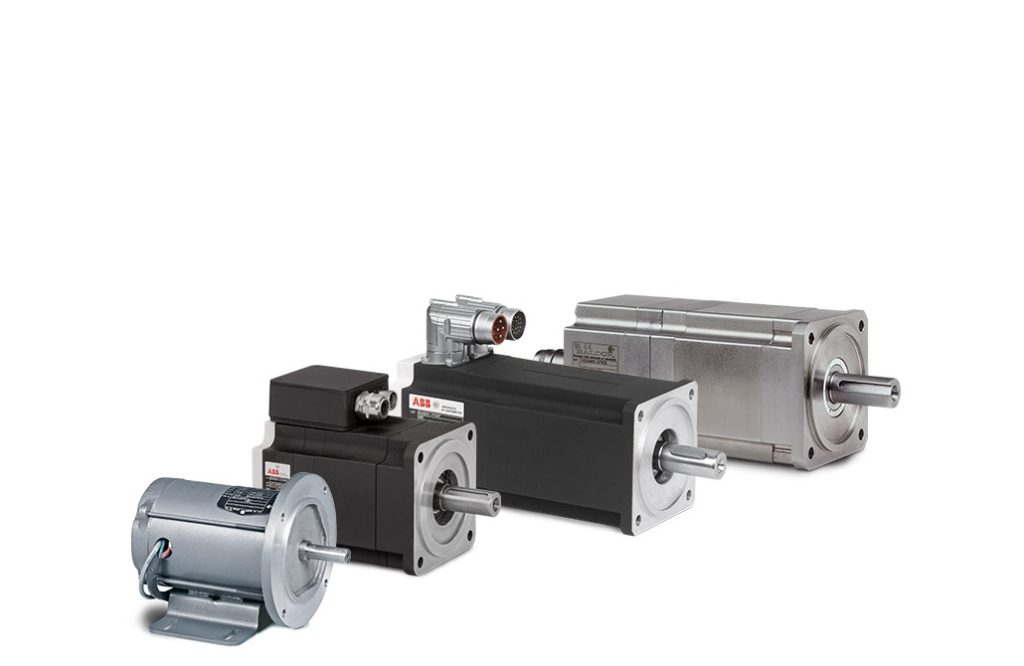
The strengths and shortcomings of stepper motors and servo motors define their respective uses. Usually utilized in applications needing exact positioning and somewhat low-speed operation are stepper motors. These cover laboratory automation equipment, CNC machines, 3D printers, and camera systems. For these jobs, they are perfect since they can move in set steps free from input. In systems like medical equipment and mechanized machinery, their capacity to hold a position without using additional power makes them very valuable.
Stepper Motors in 3D Printing
3D printing is among the most often used stepper motor applications. Stepper motors’ distinct, step-by-step character lets one precisely control the printer head and bed movement. High-quality prints depend on this so that every layer of material is positioned precisely where it is required for a successful print.
Servo Motors in Robotics
Applications where speed and smooth movement are absolutely vital depend on servo motors. Servo motors give the accuracy required for multi-axis movements in robotics. Robotic arms and actuators often feature them since smooth motion and great adaptability to changing loads are needed.
Stepper Motors in CNC Machines
Stepper motors are widely used in CNC machines to regulate tool position along the X, Y, and Z axes. For low-speed, high-precision applications such as milling, drilling, and turning operations, their ability to offer exact positioning free from feedback is perfect.
Servo Motors in Aerospace
Important parts in aircraft systems, servo motors must be highly accurate and performable under many environments. Systems like flight control surfaces and radar positioning make advantage of them since both great precision and short response times are needed.
Which Is Easier to Operate, Stepper Motor or Servo Motor?
Regarding simplicity of use, stepper motors are usually easier to operate and regulate. Their open-loop operation relieves you of concern regarding sophisticated control algorithms or feedback systems. DIY projects, small machines, or devices needing basic positioning and control typically call for stepper motors. Usually easier to fit into simple systems with microcontrollers, they are a preferred alternative for consumers requiring accuracy without complexity.
Simplicity of Stepper Motor Integration
The ease of stepper motor integration is one of the main factors explaining their smoother operation. For uses not requiring sophisticated motion control, stepper motors are perfect as they depend on simple control signals to ascertain the number of steps and directions. Hobbyists and smaller machines will find them more accessible as their open-loop character eliminates the need for costly feedback systems or tweaking.
Complexity of Servo Motor Systems
By comparison, servo motors call for more complex control systems. Servo motors are somewhat more difficult to set up and maintain depending on encoders, feedback loops, and tuning. On high-performance applications, where dynamic control and agility are required, the additional complexity pays dividends, nevertheless. Although servo motors might need additional setup and programming knowledge, their exceptional performance under difficult conditions makes them the recommended choice in industrial settings.
Maintenance and Setup of Stepper vs Servo Motors
Because stepper motors have simpler control systems and less components than other motors, they often have less maintenance needs when compared. Since their feedback systems need calibration and sporadic maintenance to guarantee the best performance, servo motors often need additional care.
Conclusion
Closed-loop stepper drivers finally mark a breakthrough in precise motion control technology. In sectors requiring great performance, their capacity to offer improved economy, more torque, and great accuracy has made them indispensable. By means of encoders, real-time feedback enables these systems to dynamically correct and adapt, therefore removing frequent problems, including missing steps and overheating. The adoption of closed-loop stepper drivers will only keep increasing as the need for more energy-efficient and highly precise systems rises.
Closed-loop stepper systems are poised to become even more important in many uses, from robotics and medical devices to manufacturing and automation, thanks to developments in encoder technology and speedier controllers. Industries can use closed-loop stepper drivers to more successfully fulfil their precision and performance criteria by knowing their characteristics and advantages.
 English
  Arabic
  Spanish
  Portuguese
  Italian
  French
  German
  Vietnamese
  Thai
Thai  Chinese
  Turkish
  Japanese
  Korean
  Russian