
Table of Contents
Brushless motors today find numerous applications in precise and high-end applications, such as those in computer disk drives, robotics, and aviation, where smooth operation and less wear are very important assets.
In this write-up, it gives a clear view of brushless motors, including their history, parts, principles of operations, types, and applications. It’s a perfect guide for any engineer, techie, or simply interested party keen on understanding how motor technology advances.
What is a brushless motor?
A brushless motor also known as a BLDC motor is a direct current motor with no brushes or commutator. Providing efficient, durable, and otherwise modern performance, it becomes an ideal replacement for such an outdated conception of a brushed motor.
They can be controlled electronically because wise-called brushed motors do not use mechanical brushes, significantly prolonging their life and increasing their efficiency.
In addition, they exhibit high initial investment costs, but the reliability and economy in terms of energy consumption make them very cost-effective in the end.
Indeed, BLDC motors are used in all modern, essential applications ranging from computer disk drives to aviation and industrial automation, where precision and efficiency are critical.
What are the Origins of brushless motors?
Advancements in semiconductor technology and electronic control systems contributed to the invention of brushless motors during the 1960s. Motors could operate on electronic switching rather than mechanical brushes with solid-state transistors and microcontrollers.
The pioneering design of a “DC machine with solid-state commutation” is credited to T.G. Wilson and P.H. Trickey in 1962 played a huge role in the introduction of brushless motors. However, the early brushless motors were low-powered despite their superior endurance.
It was not until the 1980s that the advent of stronger permanent magnet materials permitted Robert E. Lordo to obtain the first large-scale brushless DC motor, delivering more than ten times the power of earlier designs.
However, the story did not end here, as the development of BLDC underwent many changes and matured further into what is now seen as the future of electric motion and industrial automation.
How does a brushless motor work?
Brushless motors (BLDC) and brushless DC motors have radically transformed the world’s perception of electric motor technologies in the modern age. Brushless motors produce motion through electronic commutation by using electronics to switch current instead of mechanically switching current with a commutator and set of brushes.
Let’s find out how they work and their principles:
Components of Brushless Motors
There are four parts through which a brushless motor provides motion as follows:
1. Stator
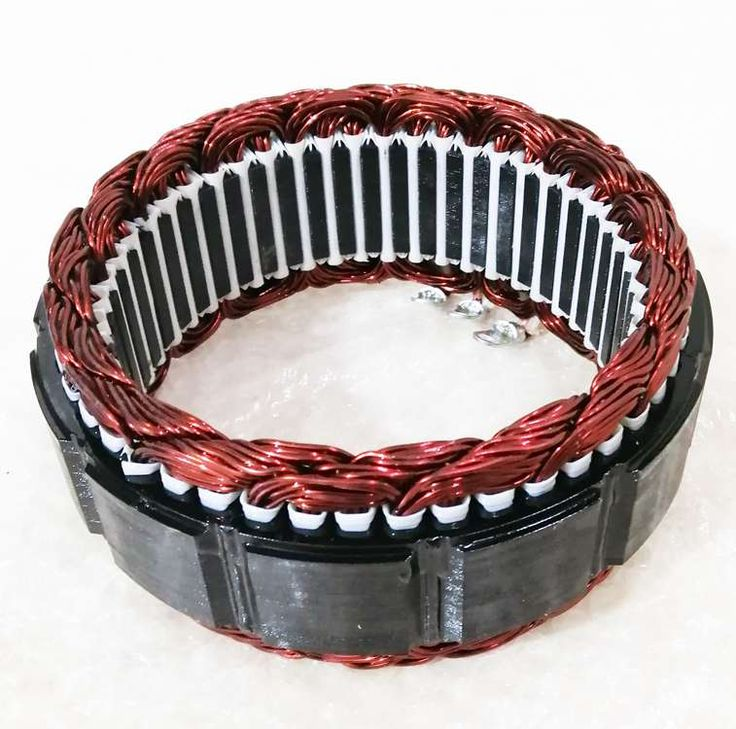
The stationary part (Stator) of the motor comprises coils of wire (windings) arranged in a circular pattern. These windings are energized in a well-controlled manner to create a rotating magnetic field, which in turn drives the rotor.
2. Rotor
The rotor is the dynamic part of the motor and is fitted by the use of permanent magnets. The magnetic field created by the rotor interacts with the electromagnetic field of the stator thereby resulting in rotation.
3. Electronic Speed Controller (ESC)

A brushless motor requires the aid of external controllers to Run Brushless Motors Directly from a DC Power Source. Here Electronic Speed Controller (ESC) works as the brain of the engine that controls the generation of currents through the stator windings and considers the speed, direction, and torque.
4. Hall Sensors (Optional)
Some brushless motors fall into the category of those that have Hall effect sensors for rotor position detection with feedback to the controller that runs the motor in a very complicated way. However, the rotor position in sensorless brushless motors is estimated using Back Electromotive Force (Back-EMF).
Working Principle of a Brushless Motor
The brushless motors utilize the principles of electromagnetism and electronic commutation. But with the brushless technology, instead of employing mechanical brushes and a commutator to shift the current, it uses an electronic speed controller (ESC) for accurate power supply to the stator windings.
This greatly reduces friction, wastage of energy, and wear making brushless motors much more efficient compared to brushed motors and additionally giving a long lifespan.
The primary constituents of the motor are the Rotor and the Stator. Where Stator comprises the multiple coils of wires called windings, organized in circular pattern and the rotor is associated with permanent magnets.
When the Current is passed through the stator windings, the rotor interacts with the field of the magnetic pole established by the magnets on the rotor and causes it to turn.
An electronic controller (ESC) of a brushless motor lays down the governing rules for the timing and manner of current switching among windings. This three-phase precise switching gives way to an unhindered and steady rotation.
Along with this, the ESC modulates the voltage and frequency of the current to adjust motor speed and torque, which is what makes brushless motors very flexible and energy-efficient.
In addition, Brushless motors have Hall effect sensors or a sensorless back-electromotive force (Back-EMF) detection method to pinpoint the rotor’s exact location. Sensors used in the motor rely on Hall sensors which deliver feedback on the rotor position in real-time, and this makes such motors suitable for applications where low-speed and high precision are required, such as robotics.
Sensorless motors make Back-EMF signals drive the estimate of rotor position and hence are more straightforward and cheaper solutions for applications like drones and electric vehicles.
Thus, the working principle of brushless motors involves electronically timed electromagnetic interactions, ensuring maximum efficiency, long life, and great performance, which is what makes brushless motors modern-day choices for highly technological applications.
What types of brushless motor?
There are many variations of brushless motors specifically set out to achieve very specific performance demands. Because of the degree of difference in design, brushless motors are hence varied in their use for different applications.
So let’s examine the major types of brushless motors in existence and the respective properties that distinguish them.
1. Inrunner Brushless Motor
Inrunner brushless motors have their rotors enclosed within the stators for a compact and tight winding design that allows for very high RPM (revolutions per minute). As such, these motors find application in precision work, whereby the speed of rotation in a small space is required.
Because inrunner motors are very efficient and can be operated rather controllably, they are generally found in:
- – RC (remote-controlled) cars and boats
- – Medical equipment requiring controlled movement
- – High-speed tooling
2. Outrunner Brushless Motors
Outrunner brushless motors provide the stator with a rotational motion encompassed by that of a rotor. Because of this, the outrunner motors develop comparatively high torque at very low speeds, thus providing high efficiency without the need for any gearing reduction.
Common applications for outrunners extend to:
- – Drones and UAVs (Unmanned Aerial Vehicles)
- – Electric bikes and scooters
- – Wind turbines and energy-efficient applications
Since their increased power for less loading is more feasible for all applications, these applications are all torque-oriented and efficiency-oriented.
3. Coreless Brushless Motors
A coreless brushless motor eliminates the conventional iron-core stator, giving it lightweight and quick responsiveness. This results in low inertia, which means quick acceleration and deceleration.
These motors shine in applications requiring high-speed movement with minimal lag, such as:
- – Precision robotics that need ultra-fast responses
- – Medical devices such as insulin pumps and surgical tools
- – Micro-drones and lightweight aerospace applications
By eliminating the iron core, these motors reduce electromagnetic interference and because of this they can work greatly in sensitive electronic environments.
4. Stepper Brushless Motors
Stepper motors move in equal steps based on electrical pulses generated by an external voltage signal from a controller.
Steppers are much more advantageous in providing highly controllable discrete movements in comparison with the motor types for continuous rotation; hence, they remain essentially indispensable for any applications requiring accurate placement of the load.
Some applications for the stepper motors include:
- – 3D printing, ensuring precision from layer to layer in movement
- – CNC machine processes, where accurate cutting and shaping is paramount
- – Automated camera gimbals grant stable and smooth motion control
They do not require feedback systems to know where they are as they operate with digital pulse signals, thus offering a cost-effective option for controlled motion tasks.
5. Servo Brushless Motors
Servo motors, rather than using step controllers like stepper motors, have feedback control systems that enable them to continuously regulate their position to maximize accuracy.
The built-in sensor such as an encoder or Hall-effect sensor will detect the position of the motor, sending data to the controller so it can fine-tune moment-to-moment movement.
Servo motors are great for:
- – Robotics, where real-time precision and force adjustments are key
- – Automated industrial machinery, where will ensure controlled and reliable performance
- – Aircraft control systems, making precision adjustments enhancing stability
Because they continually vary their speed and torque according to real-time feedback, servo motors are very popular in high-performance, automated settings.
6. Synchronous Brushless Motors
Synchronous brushless motors are actuated by the rotor following the stator’s magnetic field in constant synchronization with the rotor’s movement, maintaining speed under varying loads.
In contrast with asynchronous motors, which may slip under high loads, synchronous motors maintain a rotational speed constant, thus fitting optimal applications requiring performance constancy.
They are commonly found in:
- – Appliances such as refrigerators and washing machines
- – HVAC systems for efficient airflow control
- – Electric generators for stable output
Because of their energy-efficient operation and consistent torque delivery, synchronous brushless motors are popular in industrial and commercial applications where stability and reliability are of utmost importance.
Applications of a brushless motor
Brushless DC motors are found everywhere in industry, as they are very efficient, long-lived, and controllable over a wide application area.
Whether it is in industrial automation or electric Public Transportation, these motors are mainly fitted in consumer electronics, such as our homes and appliances. Here are some applications of loads under which BLDC motors work:
1. Industrial Automation
Brushless motors are a perfect partner for precision-driven applications in industrial engineering. Due to their capability to provide very high torque with a long lifespan and little maintenance, they find their best application in automated machinery and robotics.
Some of the common industrial applications include:
- – CNC machines, for precise and smooth cutting and shaping
- – Linear motors and servo motors, for accurate motion control
- – Robotic actuators, give power to robotic arms used in assembly, welding, and painting manufacturing operations.
2. Home Appliances
To include other kinds of domestic household appliances, this energy-efficient, space-saving, and low-noise generator is incorporated. Another advantage of making use of brushless motors is that they can work without brushes resulting in the reduced wear and tear of home devices.
Examples of commonly found applications would include:
- – Vacuum cleaners with powerful suction at lower energy consumption
- – Coffee makers and blenders, which are smooth for everyday use.
- – Hairdryers and electric shavers, whose speeds are fast but produce littleness of heat.
- – Printers and hard drives, give a very smooth, precise, and reliable movement.
3. Cordless Power Tools
BDLC motors can run on rechargeable batteries, which in turn give them the capability to operate such tools as cordless power tools. Their lightweight and high rotational speeds are real advantages compared with those used with traditional brushed motors.
Some examples of popular cordless tools powered by brushless motors are:
- – Drills and screwdrivers provide higher efficiency and torque.
- – Impact wrenches provide very strong but easy tightening efforts.
- – Circular saws and grinders allow for precise cutting and grinding with limited heat generation.
4. RC Cars – The High-Speed Racing Performance
Brushless motors have gained tremendous popularity as they can generate very high RPMs and provide extreme acceleration in remote-controlled (RC) vehicles.
Exceptionally efficient, they lend themselves beautifully to the needs of racing, losing much less energy in heat and friction than brushed motors.
5. Drone and UAV Performance Optimization in Flight
Because of its lightweight and high efficiency combined with great torque characteristics, the brushless motor is a good candidate for drones and unmanned aerial vehicles.
Brushless motors allow for very stable flights with very high control capabilities for the long battery life of drones.
Final Thoughts
Brushless motors have revolutionized the modern industry with high efficiency, reliability, and performance, which cannot be found in traditional motors.
With an ever-evolving technological world, brushless motors will soon find applications in wider horizons and will prove to be mainstays in electric vehicles, robotics, and smart devices.
 English
  Arabic
  Spanish
  Portuguese
  Italian
  French
  German
  Vietnamese
  Thai
Thai  Chinese
  Turkish
  Japanese
  Korean
  Russian