
Table of Contents
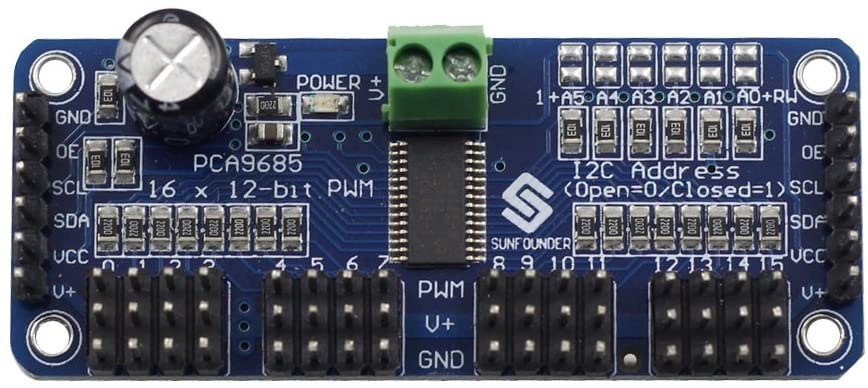
Modern automation depends on a servo driver since it guarantees precise and efficient operation of servo motors. Acting as the control center, it converts signals into precise, fluid motions for many different uses. From cameras gathering precisely stable images to robotic arms building goods on manufacturing floors, the servo driver makes difficult motion effortless.
From manufacturing to healthcare, robotics to even audiovisual equipment, the development of servo technology has made these drivers indispensable in many different fields. Early servo systems were mechanical and restricted in accuracy; now, developments in digital technology, artificial intelligence, and feedback systems have turned them into potent weapons for exact control. A servo driver guarantees the best performance today, whether in a high-end streaming camera or a CNC machine, it lowers mistakes and increases efficiency.
The principles of servo drivers, their background, components, varieties, and uses are investigated in this article to help to clarify why they are so important in contemporary technologies.
What is a Servo Driver?
Consider a servo motor as having its “brain” as a servo driver. It guarantees precise motor movement, reads orders, and performs real-time adjustments—not only provides power. Without it, motors would perform erratically, and exact automation would almost never be achievable. From cameras recording smooth panning images to robotic arms building microchips, servo drivers provide the silent power behind perfect motion.
From Industrial Giants to Everyday Tech
Servo drivers weren’t always as advanced as they are today. Early models were analog and heavy, meant for large industrial equipment. As technology developed, they grew smarter, more compact, and extensively applied in everything from consumer electronics to factory automation. Even high-end audio-visual equipment today—such as wireless mics and streaming cameras—rely on servo-driven accuracy for seamless functioning.
How Does a Servo Driver Work Its Magic?
Fundamentally, a servo driver is a personal trainer for a servo motor. Based on real-time data, it constantly adjusts power levels and fine- tunes movement by means of sensor feedback. This continuous back-and-forth guarantees that the motor loses control, wobbles, or overcorrects never. Whether it’s guiding the delicate motions of a surgical robot or keeping a drone steady in the air, servo drivers give accuracy life.
Not All Servo Drivers Are Created Equal
Servo drivers vary depending on the job they need to perform, much like automobiles come in many versions for different terrain. While linear servo drives provide smooth, ultra-precise motion for delicate jobs, pulse-width modulation (PWM) drivers are ubiquitous in high-speed automation. Certain innovative models even include artificial intelligence, learning from their surroundings to maximize real-time performance.
Why They Matter More Than You Think
Modern technologies would not have the accuracy we sometimes take for granted without servo drivers. Everything would be out of sync—shaky camera footage, unreliable robotic arms, or erratic production lines. From aerospace and healthcare to entertainment and engineering, these little but mighty tools are indispensable in many spheres and help to keep the planet running efficiently.
What are the Origins of Servo Motors?
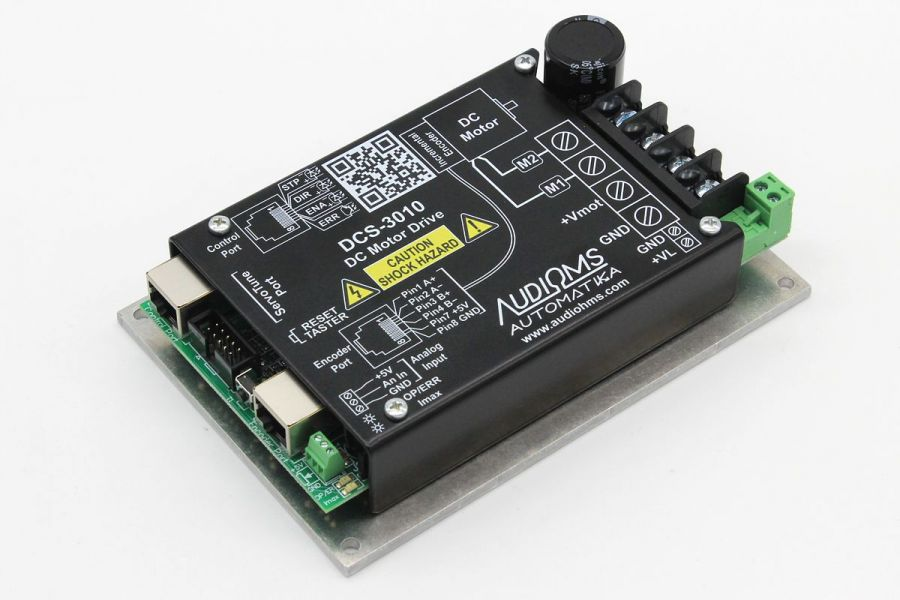
Here is the journey of modern servo drivers:
The Birth of Precision Control
Early in the 1900s, companies seeking improved machine control turned to servo motors. Either fully on or off, traditional motors made exact movement impossible. Feedback control—a technique wherein the location, speed, or torque of a motor could be changed depending on real-time input—started to be investigated by engineers This launched the first servo systems, therefore forming the basis of contemporary automation.
War, Radar, and the Rise of Servo Technology
World War II brought servo technology front stage. Advanced servo-driven mechanisms emerged from the military’s requirement for very exact tracking systems for weapons and radar. These devices let anti-aircraft weapons and missile launchers precisely track and target foes. Industries rapidly saw the promise of this technology following the war and modified it for aerospace, robotics, and manufacturing.
From Factories to Everyday Life
Servo motors got smaller, more powerful, and extensively applied in industrial automation by the 1960s. Robotic arms, CNC machines, and assembly lines began depending on servo systems for their capacity to produce minute, exact motions. These days, servo motors are found in everything from robotic surgery instruments to self-driving cars to the autofocus system of streaming cameras. Their capacity for exact movement still shapes contemporary technology.
How Do Servo Drives Work?
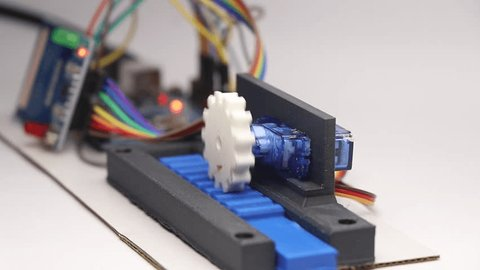
Here is the working principle of servo driver:
Motion Control Command Center of Motion
The brain behind a servo motor is a servo drive. It uses controller instructions, turns them into electrical impulses, and adjusts motor speed, position, and torque. A motor without a servo drive would just spin at a fixed speed, unable to halt at an exact moment or dynamically change its motion.
The Magic of Feedback Loops
The feedback system of a servo drive makes it somewhat unique. The motor continuously returns data back to the drive, which then makes real-time changes. Should a robotic arm wander too far, the drive fixes it. A camera lens shakes; the drive steadies it. This constant feedback loop lets motions be not only quick but also quite accurate.
From Factory Floors to Streaming Cameras
The invisible power behind innumerable applications is servo drives. They direct robotic arms in high-speed production to precisely assemble small parts. They guarantee consistent audio mixing and seamless camera panning in audiovisual equipment. Servo drives maximize motor efficiency even in electric cars, therefore increasing battery lifetime and enhancing performance.
Smarter, Faster, and More Efficient
Smarter than ever, the newest generation of servo drives These days, motion patterns can be predicted by AI-powered devices, therefore lowering needless energy consumption and raising efficiency. In sectors where speed, stability, and accuracy are non-negotiable, these developments make servo drives indispensable. Servo technology is always changing, impacting motion control and automation going forward, whether in industrial robots or streaming cameras.
What Types of Servo Driver?
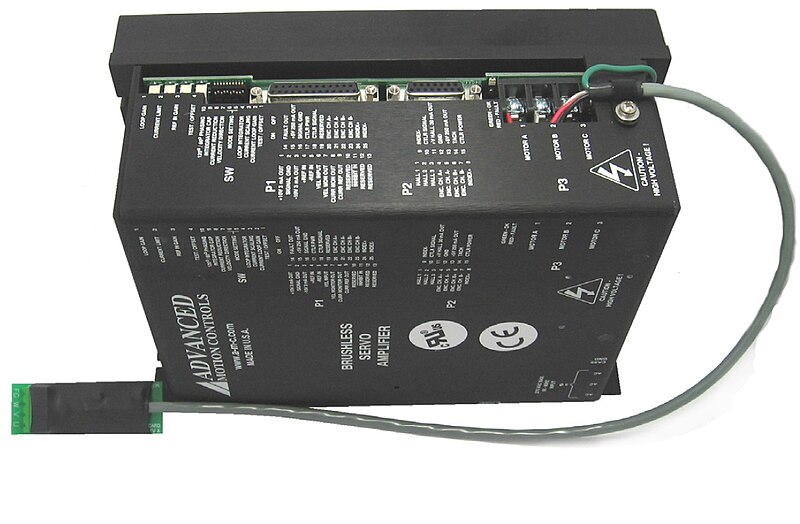
These are some of the most common types of servo drivers:
Analog vs. Digital: The Evolution of Control
Two main versions exist for servo drivers: analog and digital. Originally employing continuous voltage signals to regulate motor movement, analog servo drivers were the first models. Although consistent, they lacked accuracy. Conversely, digital servo drivers provide significantly better accuracy and efficiency by processing signals using microprocessors. Since their superior features and real-time adaptability, most businesses now use digital servo drivers.
AC vs. DC Servo Drivers: Powering Different Applications
The kind of power source determines whether a servo driver runs AC or DC. Common low-power applications such as miniature robots and automation equipment make DC servo drivers easier and more often employed. Though they are used in industrial machinery, CNC equipment, and even high-end audiovisual setups, AC servo drivers manage larger power needs and provide smooth and consistent performance for devices like streaming cameras and professional audio mixers.
Open-Loop vs. Closed-Loop: Precision at Different Levels
Certain servo drivers run in an open-loop system, in which case they transmit commands to the motor without getting feedback. Though reasonably priced, they lack the accuracy needed for high-stakes uses. Closed-loop servo drivers, on the other hand, constantly change motor performance depending on real-time feedback, therefore preventing overshooting or lag. For jobs needing great accuracy, including robotic surgery, automated film production, and precision sound engineering, this is absolutely vital.
Integrated Servo Drivers: Compact and All-in-One Solutions
By combining the motor and driver into one unit, integrated servo drivers save the need for separate parts. This design saves space, lessens wire complexity, and makes installation easier. Compact automation systems, robotic joints, and medical equipment where space is restricted yet exact motion control is crucial make frequent use for these servo drivers.
Integrated servo drivers, unlike conventional systems, provide plug-and-play capability, therefore lowering setup time and any compatibility problems. By reducing connecting points and hence reducing the possibility of signal interference or failure, they also improve dependability. Industries emphasizing lightweight, high-performance automation—such as drone technology and portable audiovisual equipment—are progressively using integrated servo drivers for their simplicity and efficiency.
The Rise of Smart Servo Drivers
Modern servo drivers are becoming increasingly intelligent as IoT and artificial intelligence evolve. Analyzing performance data, system failure prediction, and energy usage optimization are only a few of smart servo driver capabilities. Whether they are for factory production lines or audiovisual equipment requiring perfect movement and sound synchronization, these developments make them very essential in sectors demanding seamless automation.
Applications of Servo Driver
The broad spectrum of use of servo drive is driving demand for it. Appreciated at over $13.52 billion in 2024, the worldwide servo motor market is expected to rise at a CAGR of 6.9% from 2025 to 2030.
Driving Automation in Smart Manufacturing
Modern manufacturing’s backbone is servo drivers, where speed and accuracy are absolutely vital. By assembling sensitive electronic components, they oversee robotic arms that lower human error and boost efficiency. Mass manufacturing is faster and more dependable since packaging and conveyor systems also depend on servo drivers to guarantee regular operations.
Enhancing Motion in Robotics and AI
Servo drives help robots to move with human-like accuracy. They offer real-time changes for regulated, fluid motions whether they be robotic prosthesis or autonomous warehouse robots. By means of servo-driven technology, AI-powered systems improve learning capacity, thereby enabling robots to be more flexible in sectors including logistics, medical aid, and even space exploration.
The Secret Behind High-End Audiovisual Equipment
Excellent audiovisual performance depends mostly on servo drivers. They guarantee perfect lens adjustments in streaming cameras, therefore avoiding jerky zooming or focusing problems. To keep sound clarity, wireless microphones and audio mixers use servo-activated parts, therefore removing undesired distortions and latency in studio recordings and live broadcasts.
Improving Everyday Transportation Systems
Apart from industries and offices, servo drivers are absolutely vital in transportation. Effective power steering and adaptive suspension of electric and hybrid cars depend on servo-operated systems. For safer and more energy-efficient travel, high-speed trains and aircraft apply servo technology to manage braking, stabilizing, and adjusting motion.
Does a Servo Motor Need a Servo Driver?

Here is the rationale for servo motor necessity for a servo driver:
Power Alone is Not Enough
Simply said, a servo motor requires a servo driver to run effectively. Acting as a control unit, the driver precisely signals to change the torque, speed, and location of the motor. A servo motor would lack accuracy and struggle to execute coordinated, complex motions without a servo driver.
The Role of Feedback in Precision Control
Constantly monitoring sensor feedback, servo drivers instantly make micro-adjustments. Applications like robotic surgery, CNC manufacturing, and camera stabilization are so exact for this reason. A servo motor would overreach or lag without this feedback loop, producing unpredictable and ineffective movement.
Servo Drivers in Energy Efficiency
By varying motor output depending on demand, advanced servo drivers now maximize power usage. In sectors trying to cut energy waste while preserving performance, this is absolutely vital. From smart manufacturing to robotics driven by artificial intelligence, servo drivers enable the creation of more sustainable and effective motion control systems.
When Motors and Drivers Work as One
In applications involving accuracy, servo motors and servo drivers are intertwined. The two must cooperate to provide perfect mobility, whether in an automated drone, a camera gimbal, or an industrial production line. A well-designed servo motor and an intelligent servo driver taken together produce a system with high-speed, high-accuracy performance in any field.
Conclusion
A servo driver guarantees accuracy, stability, and efficiency in many uses, therefore transcending their simple motor control role. Industries depending on exact motion control—including robots, medical technology, and audiovisual production—would suffer with inconsistency and inefficiency without it. Servo drivers are quite useful in automation because of their capacity to process real-time feedback and provide quick modifications.
Servo drivers are become smarter and more flexible as technology develops, including artificial intelligence for energy economy and predictive maintenance. Their increasing importance in modern automation will help to shape motion control going forward in previously unthinkable ways. A servo driver is the unseen force maintaining synchronisation whether in a streaming camera catching seamless transitions or a high-speed production line.
Anybody trying to increase accuracy, dependability, and performance in automated systems must first understand the powers and uses of servo drivers.
 English
  Arabic
  Spanish
  Portuguese
  Italian
  French
  German
  Vietnamese
  Thai
Thai  Chinese
  Turkish
  Japanese
  Korean
  Russian